
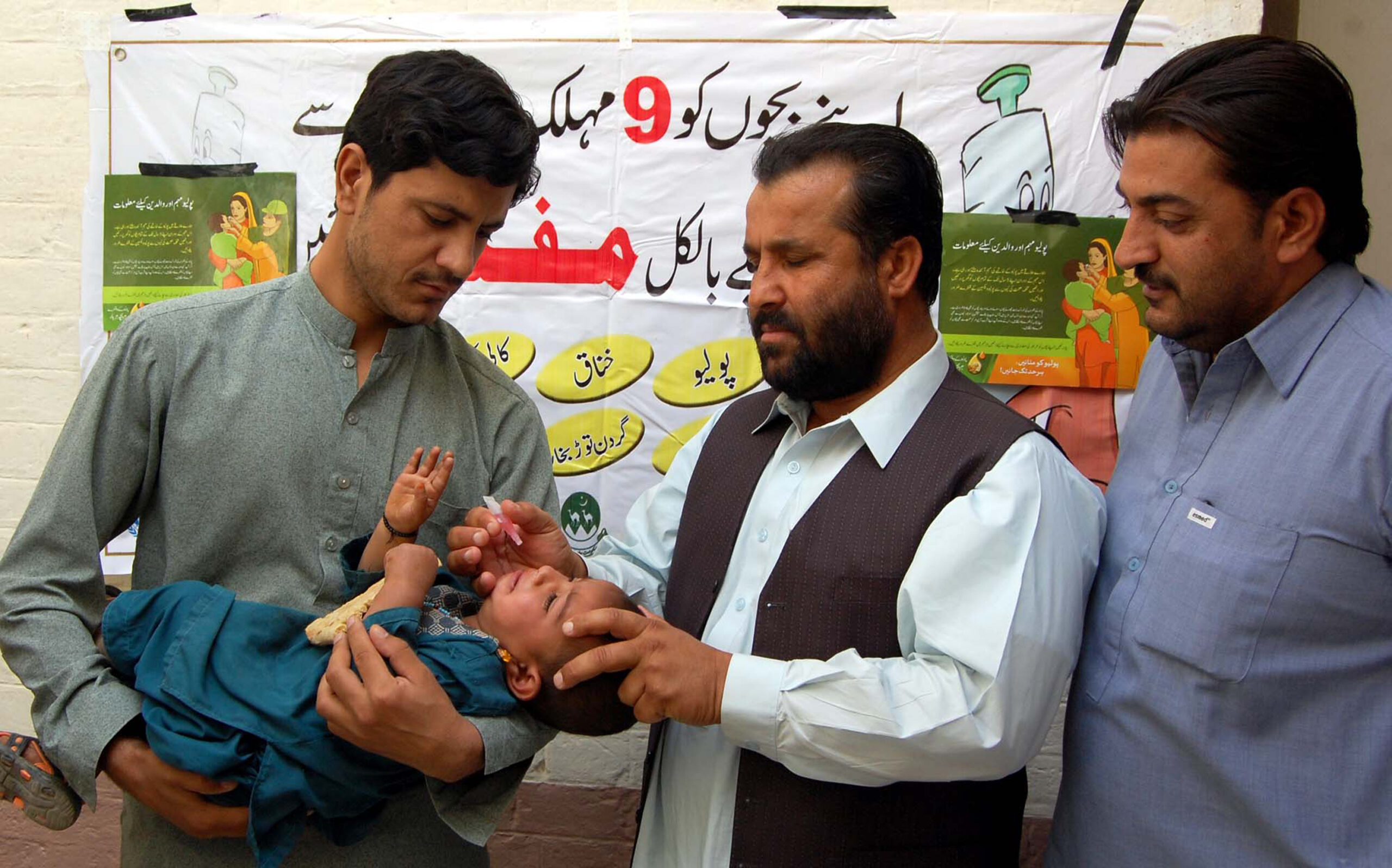
Last year alarm bells rang internationally when an outbreak of Polio was reported in war-torn Gaza. A major humanitarian effort was set in motion to allow a vaccination programme take place. Afghanistan is another country with Polio cases. Sadly, Pakistan in recent years has seen a rise in the number of Polio cases, reports Columban Missionary Fr Dan O’Connor.
An increase in the number of infections raises the hard question for Pakistan – is the Government and are the Health Officials truly committed to eradicating Polio?
Last year a young girl became the 72nd and last recorded Polio victim of 2024. Balochistan Province had 27 cases, followed by Khyber PakhtunKhwa with 22, then Sindh with 21 and one each in Punjab and Islamabad. Recently, Prime Minister Shehbaz Sharif stated, “the Government of Pakistan will not rest until we have ended the scourge of Polio from our borders.”
I remember many years ago when I was attending school in Hokitika, New Zealand, there was a girl who had contracted Polio. During those years I recall nurses coming to school to administer Polio drops which were quite tasty.
Polio or Poliomyelitis is a viral infection. Lack of access to clean water increases the risk of transmission. There is no cure for the disease and paralysis caused by the infection is irreversible.
In Pakistan I have seen too many people of all ages limping along as best that they are able – victims of this terrible debilitating disease. Some wear a brace, while others get by with the aid of a stick. Others, having one leg badly weakened, grasp it with their hand so as to give support to the effected leg. My heart goes out to them as they must bear this burden for the rest of their lives. I also admire them for their courage and determination.
It is said that the Polio virus entered Pakistan in the 1970s. In 1978, because of the rise in the number of cases, an Extended Progressive Programme of Immunisation was launched with great hopes for the control and eradication in the country.
Unfortunately this was undermined by a number of obstacles. Then there was another launch of the Pakistan Polio Eradication Programme in 1994 and this produced a significant decline from nearly 20,000 cases in the early 1990s to 8 cases in 2018, 14 in 2019, 85 in 2020 to then just I in 2021.
Tragically the tide turned again with the numbers of recorded cases on the rise over the last few years to 72 in 2024.
Pakistan, with a population of more than 240 million could have about 40 million children under the age of five who require the vaccination. Three doses are required annually so as to boost the immunity. Previously, despite with meagre resources, old tools and lack of personnel the results were good. Now it is tragic that a Polio Free Pakistan appears to be a distant dream.
Many parents and localities persist in refusing to allow their children be inoculated. An issue that contributes to this is that the female literacy rate is just 51 percent. Some think that the vaccination will result in infertility.
During the Inoculation Campaign of October 2024 in Sindh Province, a troubling trend emerged in that there were over 43,000 vaccine refusals. In many places, especially the north of the country, armed security personnel accompany the health teams. Despite this precaution, during 2024 at least 12 people, mostly police offices were killed and dozens injured during vaccination campaigns. One health worker related, “We walk miles daily, often under threat, to save lives. We demand safety, respect and a proper service structure.”
Health workers are stationed at many places, such as bus stops, railway stations, hospitals, health clinics, schools. There are teams who walk from house to house performing immunisations. The date is recorded on their records as well as being written on the door of the family house and the children‘s finger dabbed in an ink pad.
To determine if a child is under 5 years they are asked to put their arm over their head. If they are unable to touch their ear they are given the polio drops. The children cry our loudly as they fear that they will be receiving an injection. Often when I visit a family or celebrate the Sacrament of Baptism the small children are fearful and cry out loudly. I try, with the help of the parents, to comfort them.
As a part of the ceremony I ask the parents if their child has been given the health inoculations as well as informing them of the importance of sending their children to school. Parents need to be made aware that refusing the vaccine is not just a private decision but a public health hazard.
Fr Dan O’Connor was ordained in 1986. He lives and ministers in Pakistan.
First published in the December issue of the Columban Pakistan Mission Unit Newsletter.