
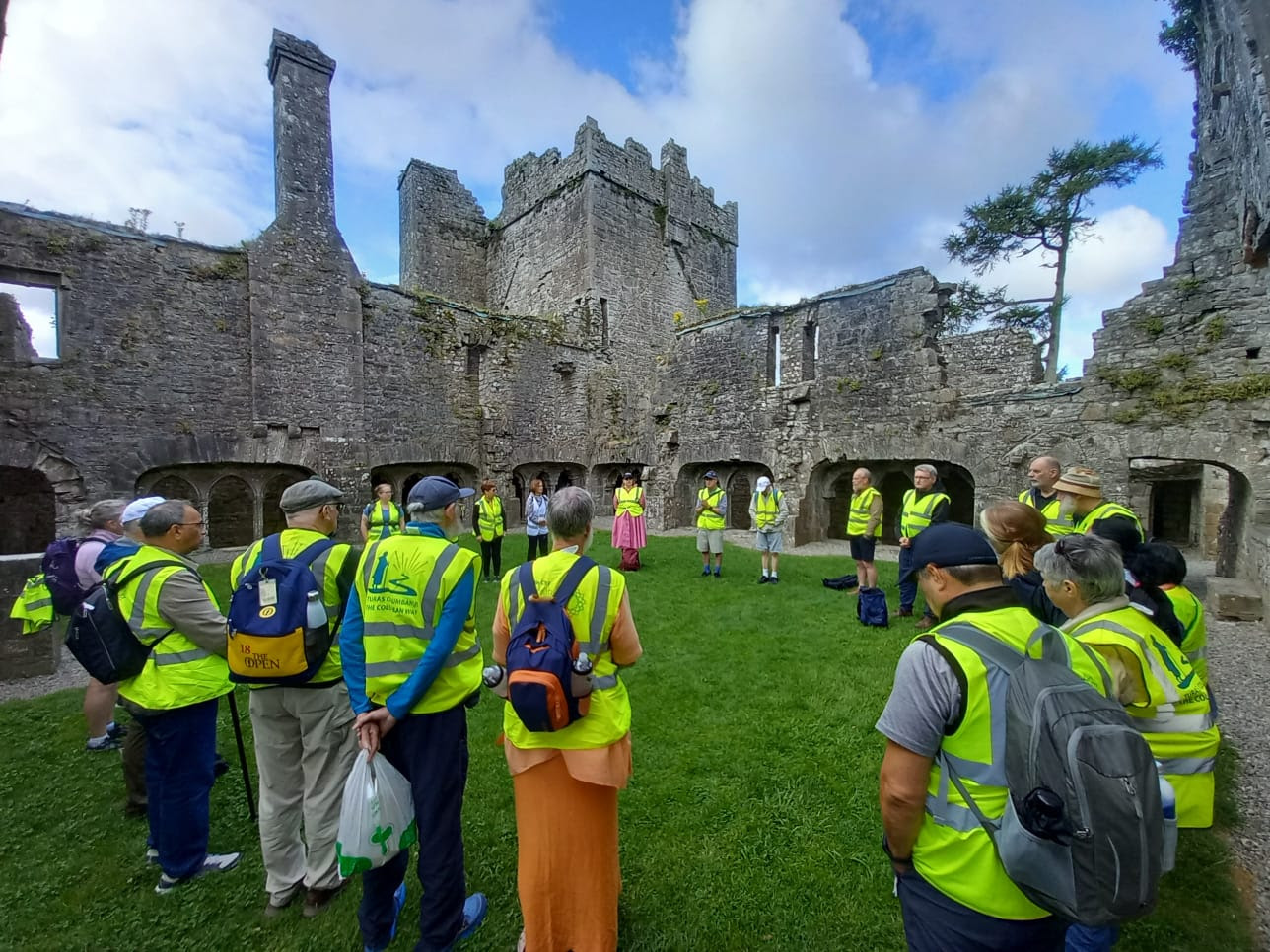
Fr Pat Colgan was among those who took part in a recent pilgrimage walk honouring the rich religious landscape of County Meath. It brought together members of Turas Columbanus, the Irish branch of the Via Columbani Network which seeks to foster European unity around the values of St Columbanus, particularly in the communities which host his monasteries, and members of the Dublin City Interfaith Forum.
Ireland’s first ‘Interfaith Camino’ began on Friday 25th July 2025 with a gathering at St Finian’s Catholic Church in Clonard.
Finian, the “Teacher of the Irish Saints” was born in Myshall, County Carlow – the same village as St Columban – and was trained by Ss Cadoc and Gildas in Wales. He returned to Ireland where he built schools, monasteries, and churches, of which Clonard was his most famous foundation.
St Columba (Colmcille) was one of his students among the “Twelve Apostles of Ireland” at Clonard, where Finian died during a plague in 549AD.
All this was amply explained to the participants in the camino by parish priest, Fr Tom Gilroy. After his talk he then walked the first 6.5km with the group to Blackshade Bridge, where we had the second of our ‘Interfaith Pauses’, during which we were enriched by meditations from members of the Hindu, Bahai and Christian faiths along the way.
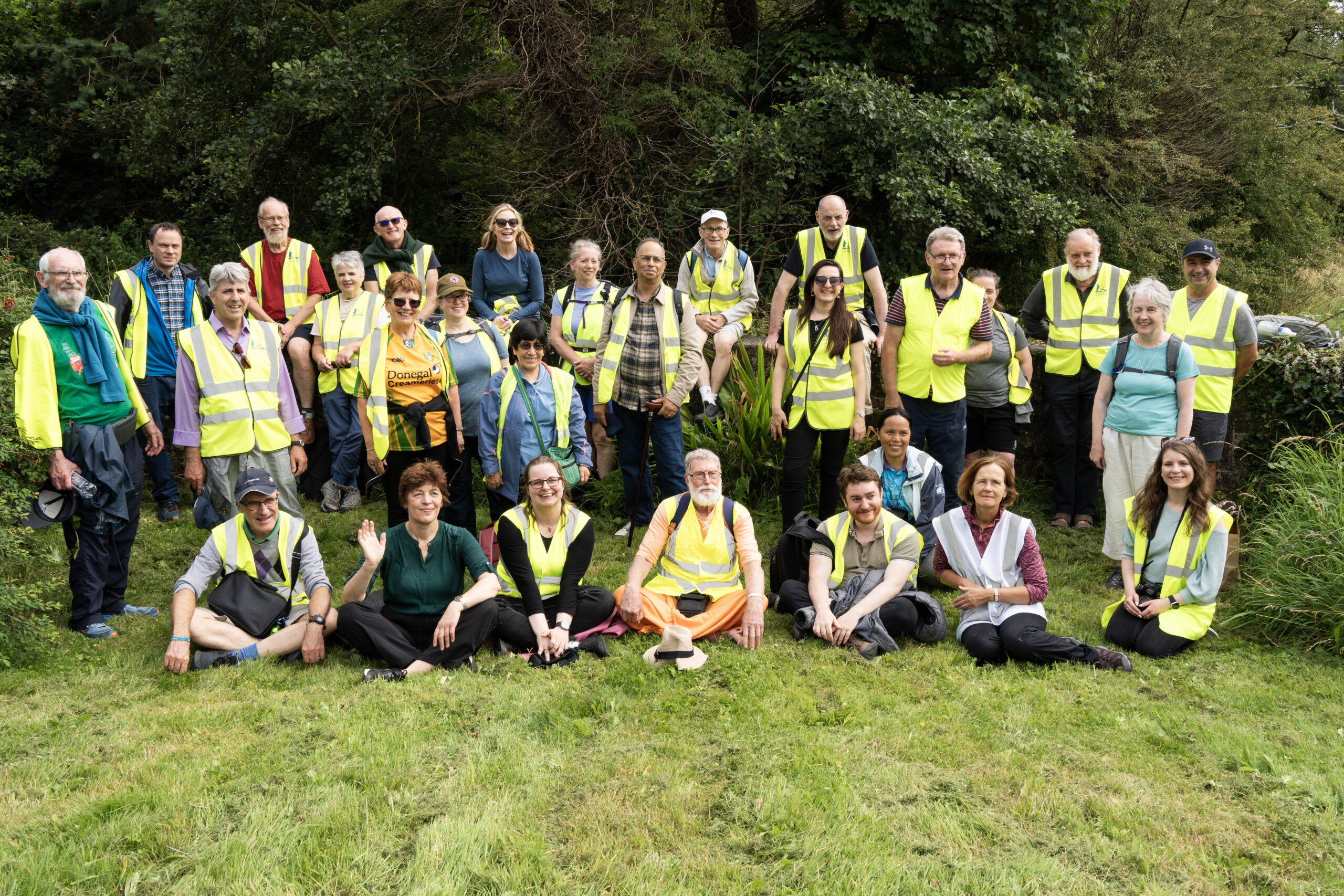
The full pilgrim group on arrival at Dalgan Park at the end of Day 2 of the Interfaith Walk. Photo: ColumbanMissionImages
Our next stop, after another 6kms, was at the house of our great Turas and Columban Missionary collaborators, Michael Gunn and his wife Linda, who some years ago discovered buried under their property some conch shells associated with ancient pilgrims to the Camino de Compostela (https://caminoways.com/camino-de-santiago).
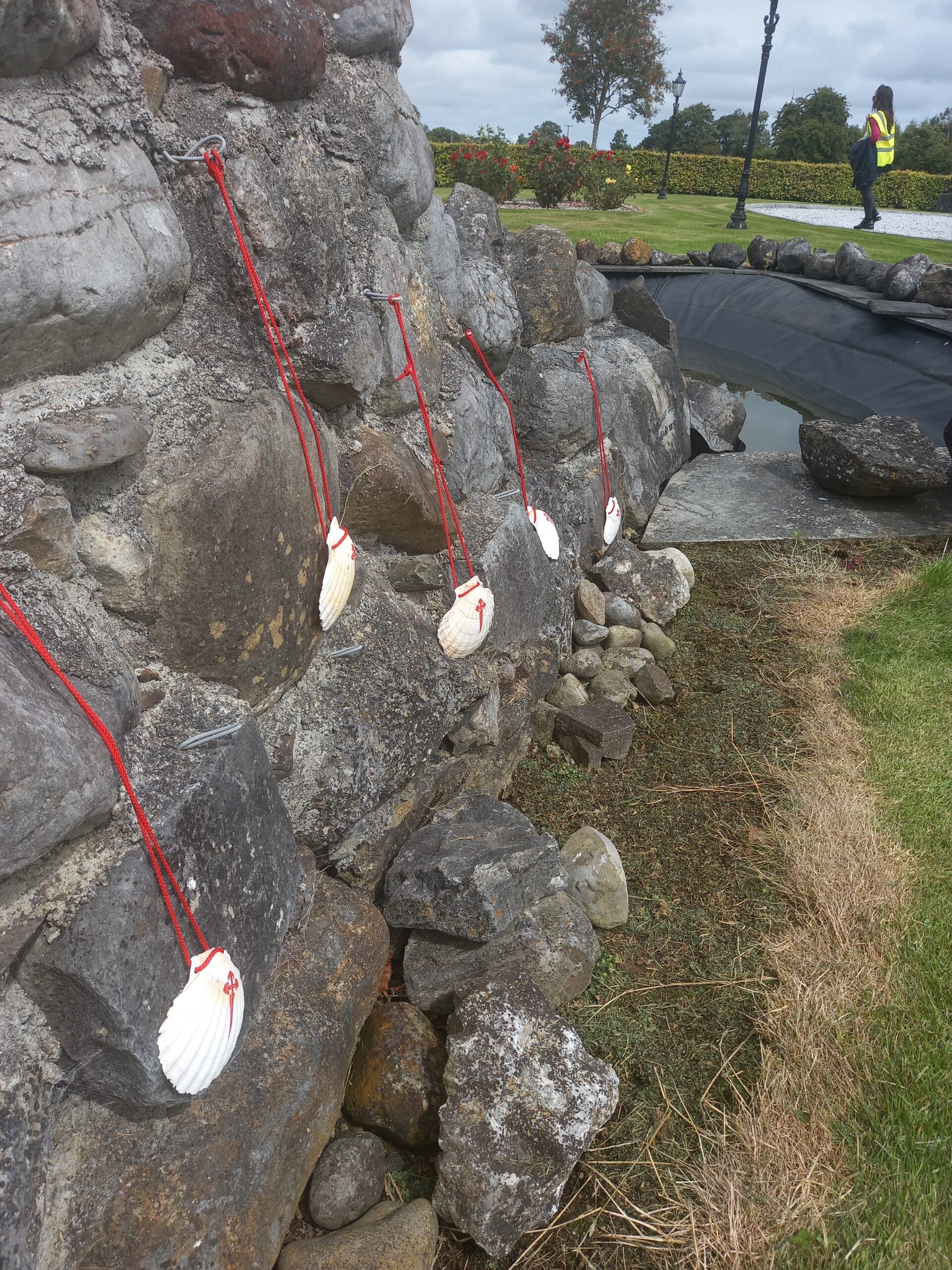
Conch Shells found on the property of Michael Gunn, Ballivor
It was wonderful to be there on the Feast of St James!

In St Patrick’s Church of Ireland Centre, Tara, awaiting the video.
Michael also alerted us to the strong tradition that St Columban walked through this area in the 6th century from his birth place of Myshall, via Finan’s Clonard en route to St Comgall’s famous monastery at Bangor, Co Down – as evidenced by the presence of a Church of St Columbanus at Ballivor.
About 7km further on, we stopped for more welcome refreshments at the GAA Club of Boardsmill, provided by its manager, and local Knight of Columbanus, TJ Reilly.
After another few kilometres, we boarded a bus for the town of Trim, which in the 12th century (the early period of Norman power) boasted the largest castle in Ireland as well as seven monasteries and three hospitals.
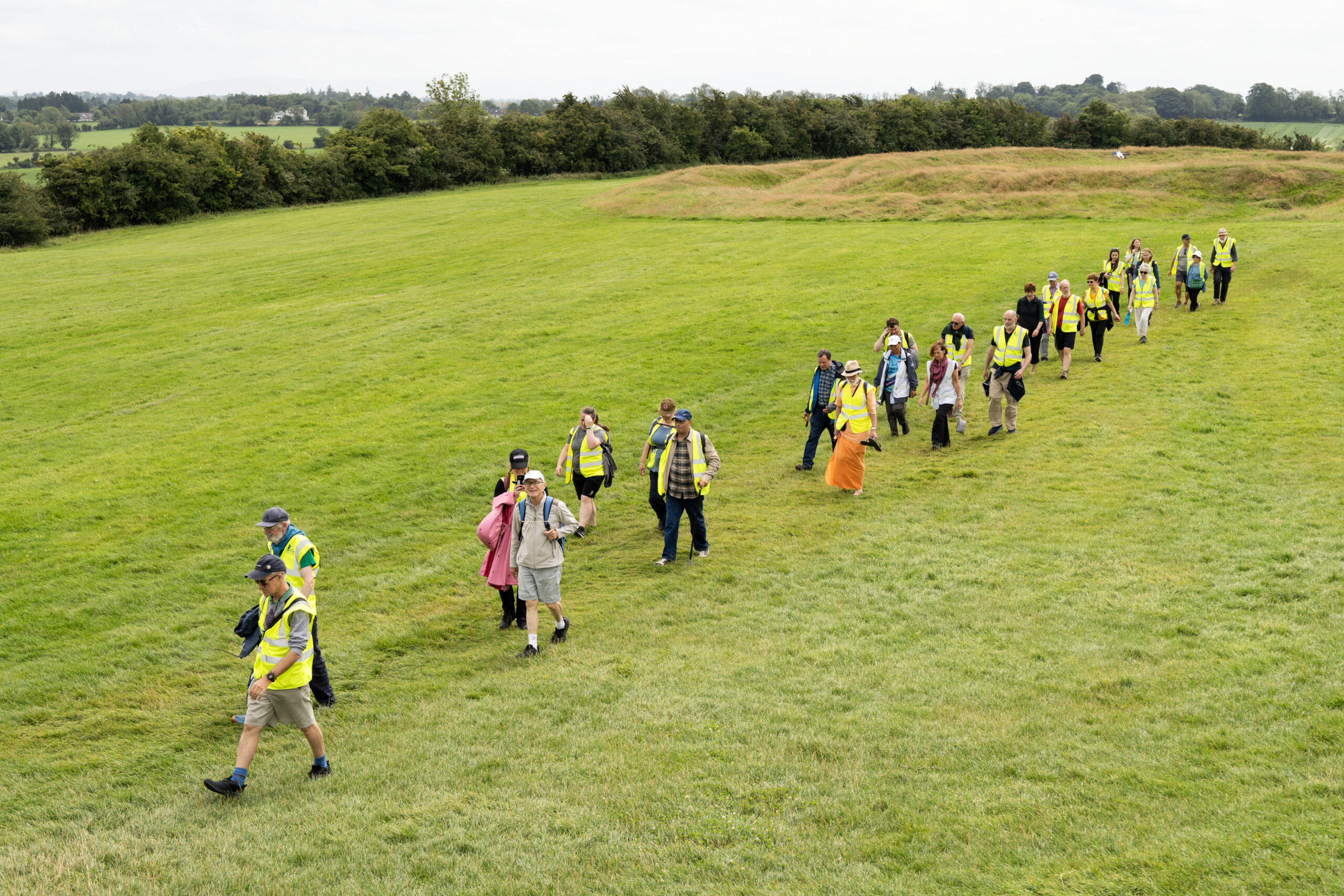
Pilgrims walking over the Hill of Tara, Co Meath.
The town is also associated with historic figures such as the Duke of Wellington and Dean Jonathan Swift.
We ended our first pilgrimage day at the parish church of St Patrick’s, where Swami Purnananda of the Eire Vedanta Trust led us in moment of silence and gratitude.
Of the 30 or so pilgrims who took part in Day 1, about half stayed overnight at the Columbans’ Dalgan Park.
On Saturday 26th July, those who stayed in Dalgan and those who returned from home, were joined by some “fresh legs” of pilgrims from Belfast and Cork!
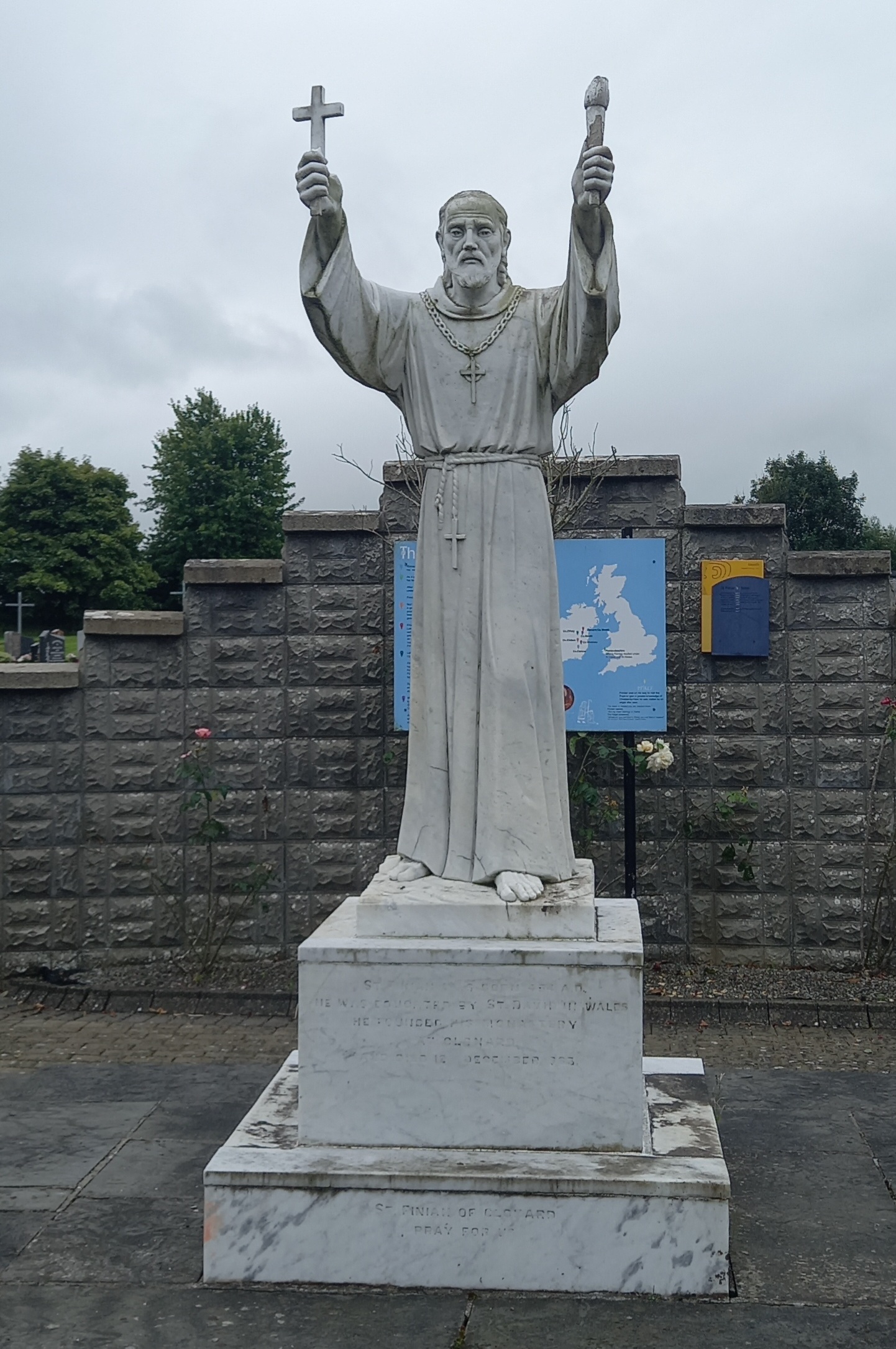
St Fininan’s Statue, Clonard
At 9am, we left for Bective Abbey, which was founded in 1147 for the Cistercian Order by Murchad, King of Meath. It was Ireland’s second Cistercian Abbey; a daughter house to Mellifont in Louth.
Bective Abbey’s atmospheric ruins have often has been used by Hollywood producers. In 1955, they featured in the film, Captain Lightfoot starring Rock Hudson. They also featured in the 1995 blockbuster Braveheart and most recently in 2020 in Ridley Scott’s medieval epic The Last Duel, starring Matt Damon, Adam Driver, Jodie Comer and Ben Affleck.
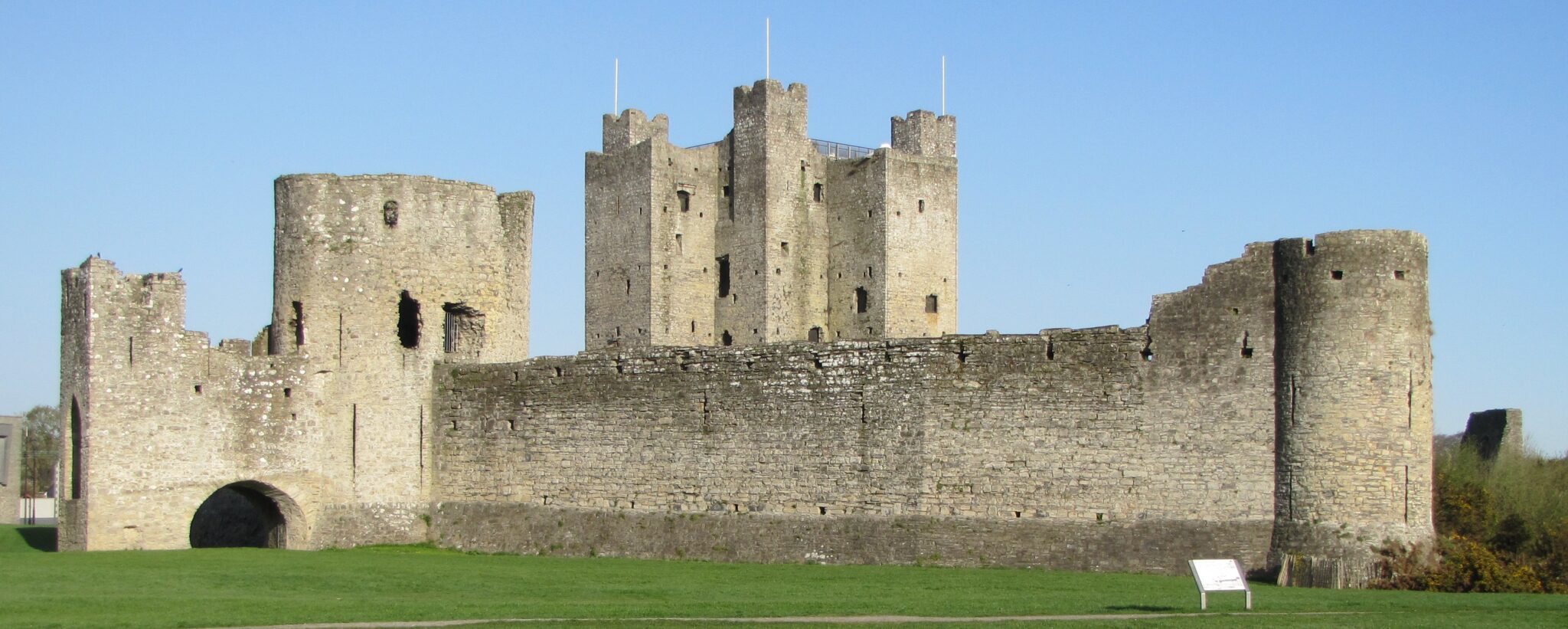
Trim Castle
Our intentions were less “dramatic” on our pilgrim walk. The central courtyard of the Abbey’s ruins provided a powerful location for our opening prayer, led by Rev Sandra Beverungen of the German Lutheran Church of Dublin. We used a chant which in 1989 in Leipzig (East Germany) was sung at prayer rallies that played a crucial role in the peaceful revolution and the subsequent fall of the Berlin Wall.
After other stops at a Dolmen – a megalithic tomb with a large flat stone laid on upright ones – we were provided with welcome hospitality at the house of Dalgan employee Sandra Walsh, before we walked up the Hill of Tara, a site that has been in use for more than 5000 years as a place of burial and assembly, as well as the legendary inauguration site of the ancient High Kings of Ireland.

An ‘Interfaith Pause’ at a Holy Well near Tara.
We honoured its ground and history, and watched an explanatory video at the adjacent Church of Ireland. After a quick lunch, we walked to Dalgan Park, where we finished our pilgrimage with a silent walk among the woodland there, punctuated by readings from Sermons and Prayers of St Columban.
Afterwards a pilgrim from the Northern Ireland Interfaith group said: “… this pilgrimage opened my eyes to the spiritual legacy of the Boyne Valley – something I had not appreciated before”, while another, from Co Cork said, “My husband and I really enjoyed the experience. It’s a wonderful project to connect with the long sense of spiritual history of the area and of St Columbanus in particular.”
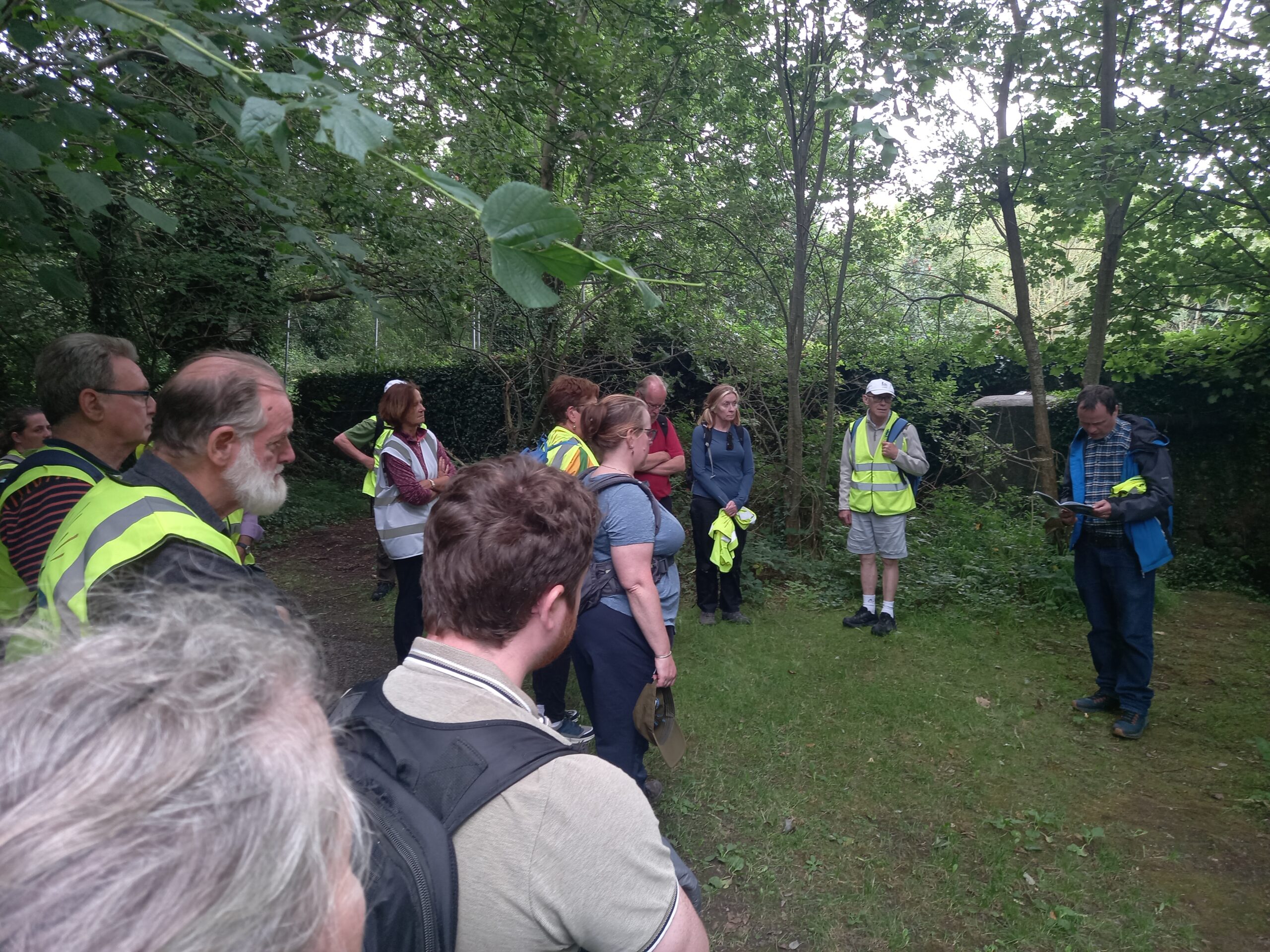
Prayer in the Forest at Dalgan Park.
Though not without challenges, logistically and the length of the walks, our new and old friends do hope that such collaborations will continue.
It was Columbanus himself who, in his letter to French Bishops said: “Whether we are Franks, Irish or Britons or whatever race, we are members of one body.” One would think he would strongly support any activity which furthered dialogue, harmony and unity in a continent and world badly fractured by division and conflict.
Dublin Interfaith Forum: https://www.dcif.ie/