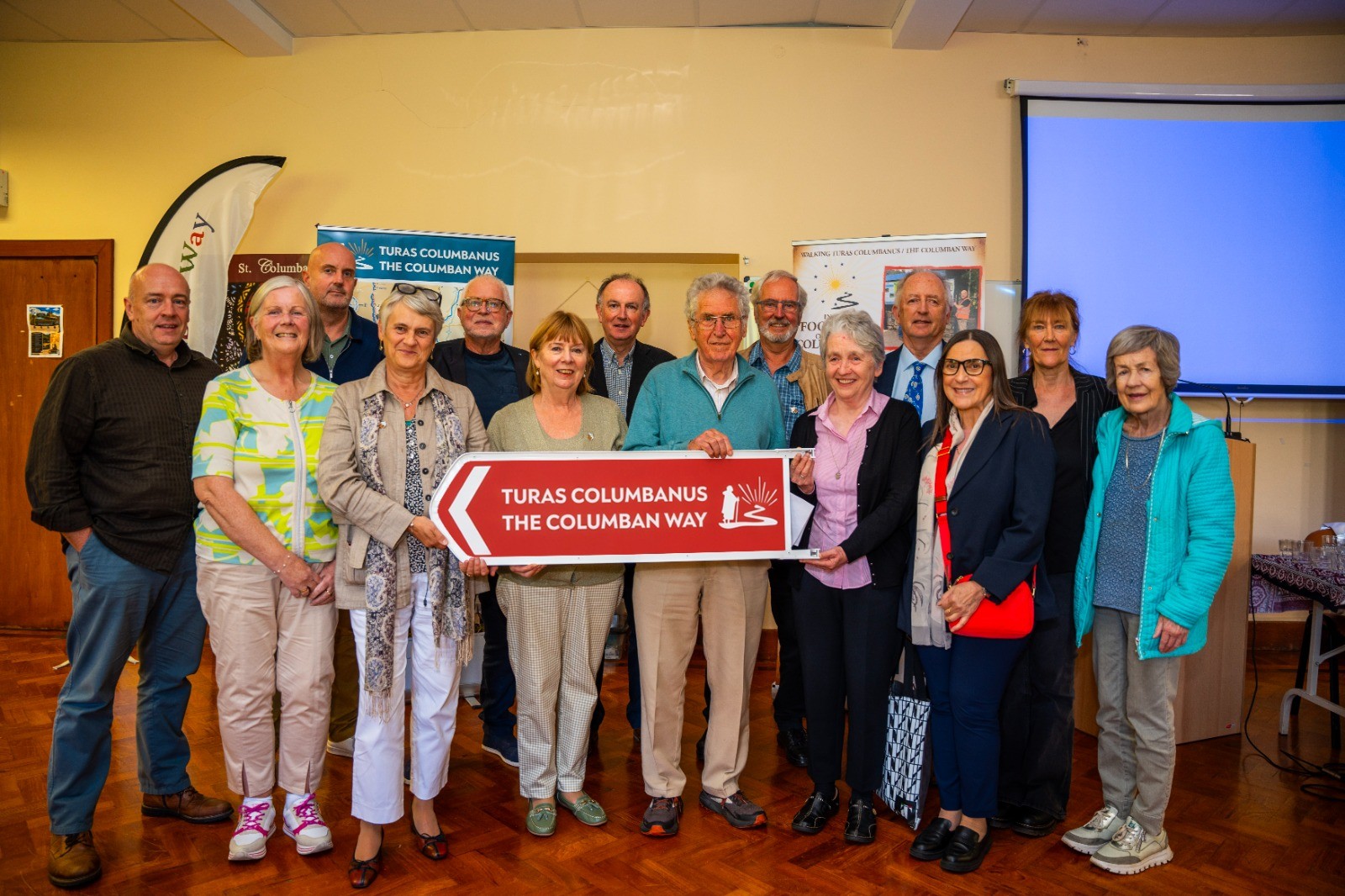
Religious pilgrimage can be “a life-changing experience”, Northern Ireland politician Deborah Girvan of the Alliance Party has highlighted.
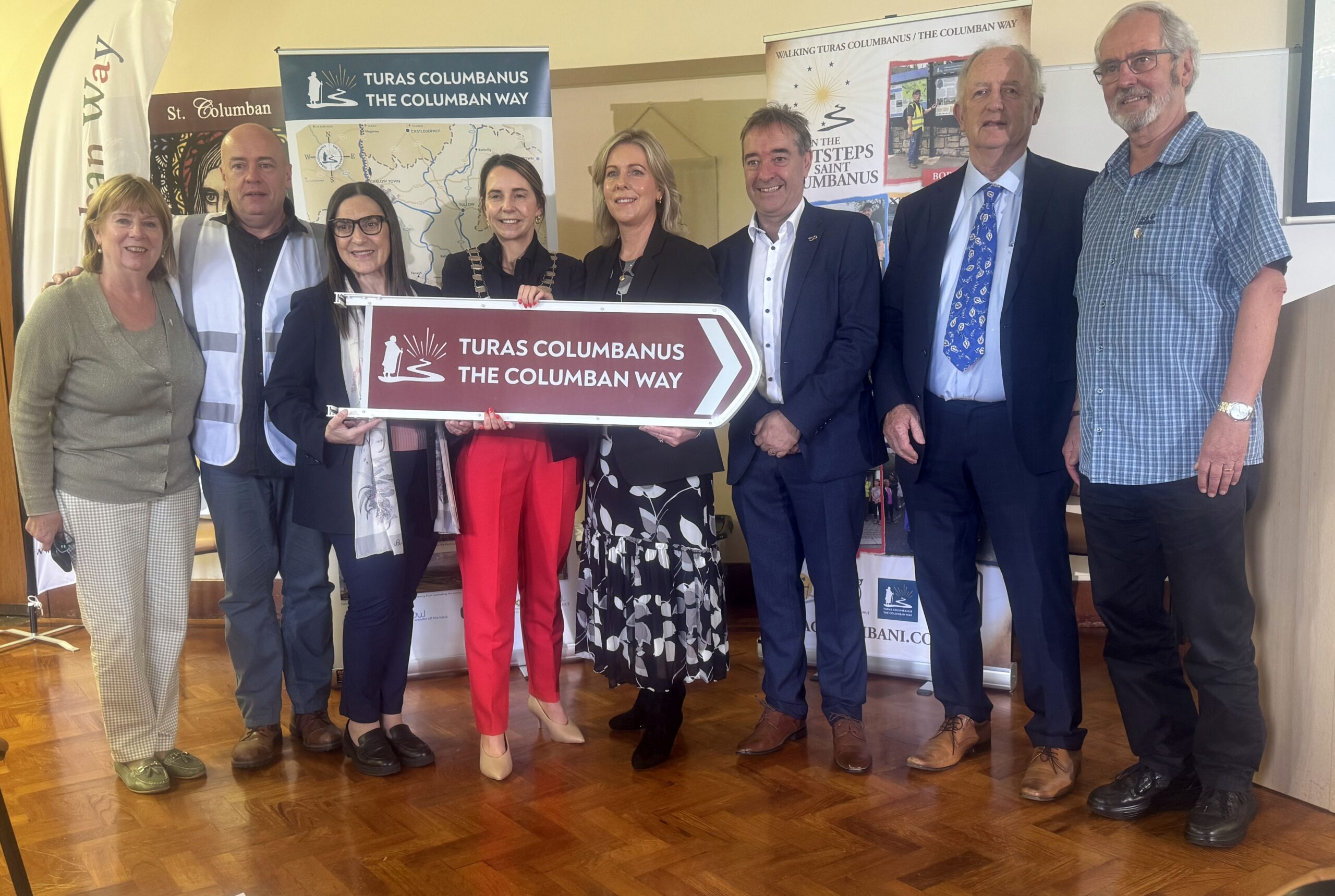
Speaking after she gave the keynote address at the conference ‘Pilgrim, Heritage & Regenerative Tourism’ at Dalgan Park, she explained, “I live on the Columban Way/Via Columbani in Northern Ireland and I see people walking this route with their sticks and rucksacks.”
“People have contacted us through the Friends of Columbanus and we always give them a very warm welcome. For me it has been an absolutely wonderful way of meeting people.” She added, “My journey has been amazing.”
The Columban Way is a pilgrim route which runs through Ireland, the UK and Continental Europe along trails connected with the 6th century monk St Columbanus.
Deborah Girvan said that it provided “an opportunity to connect communities and diverse cultures”.
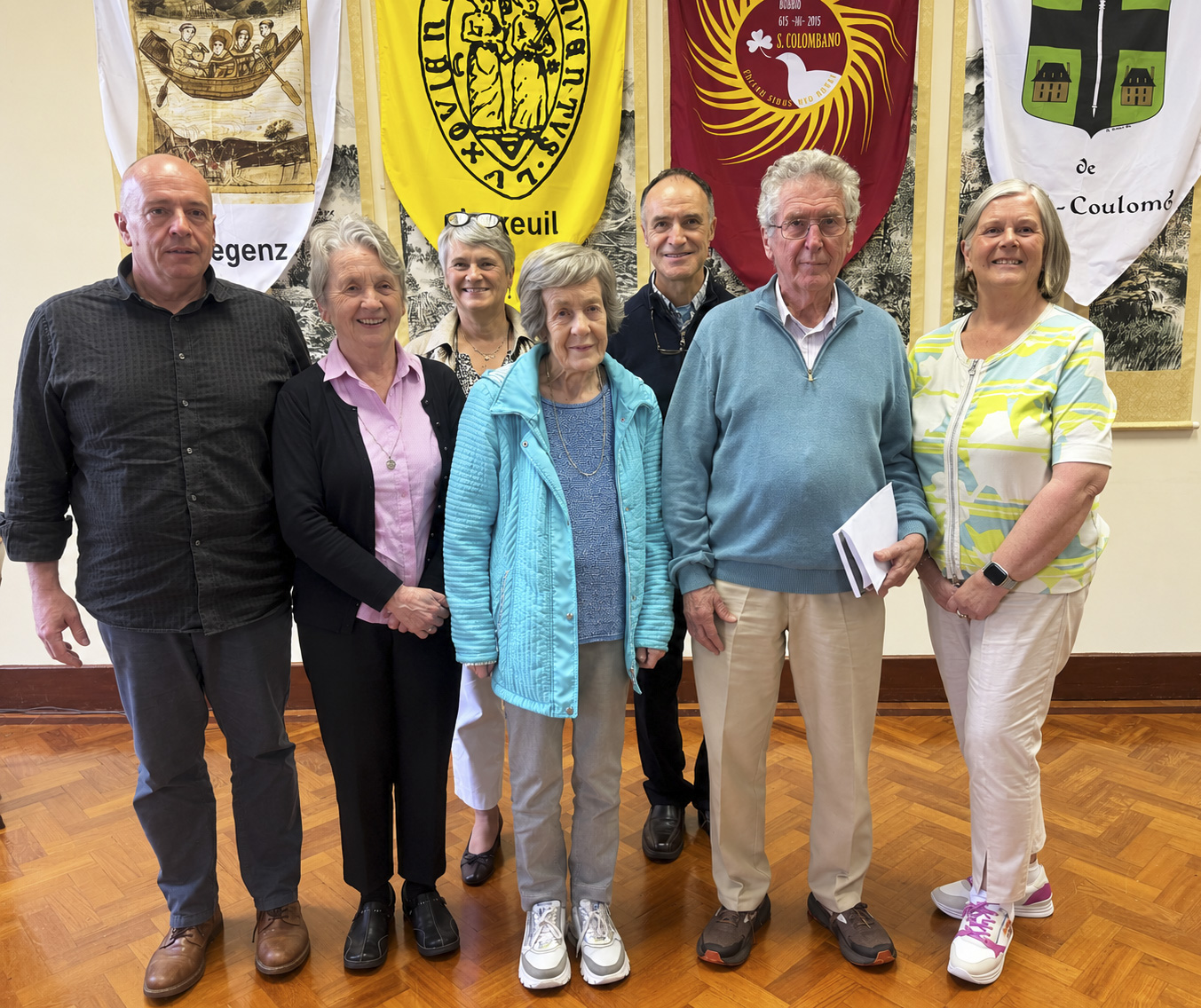
Today, the Via Columbani Network, which the Columbans in Ireland are a founding member, offers a cultural route to pilgrims, hikers and tourists that links the various sites founded by or associated with St Columban, all the way from Mount Leinster in Co Carlow to Bangor in Co Down, through Eastern France, San Gallen in Switzerland to Bobbio in Italy, where the Irish monk was buried and is honoured with an Abbey in his name.
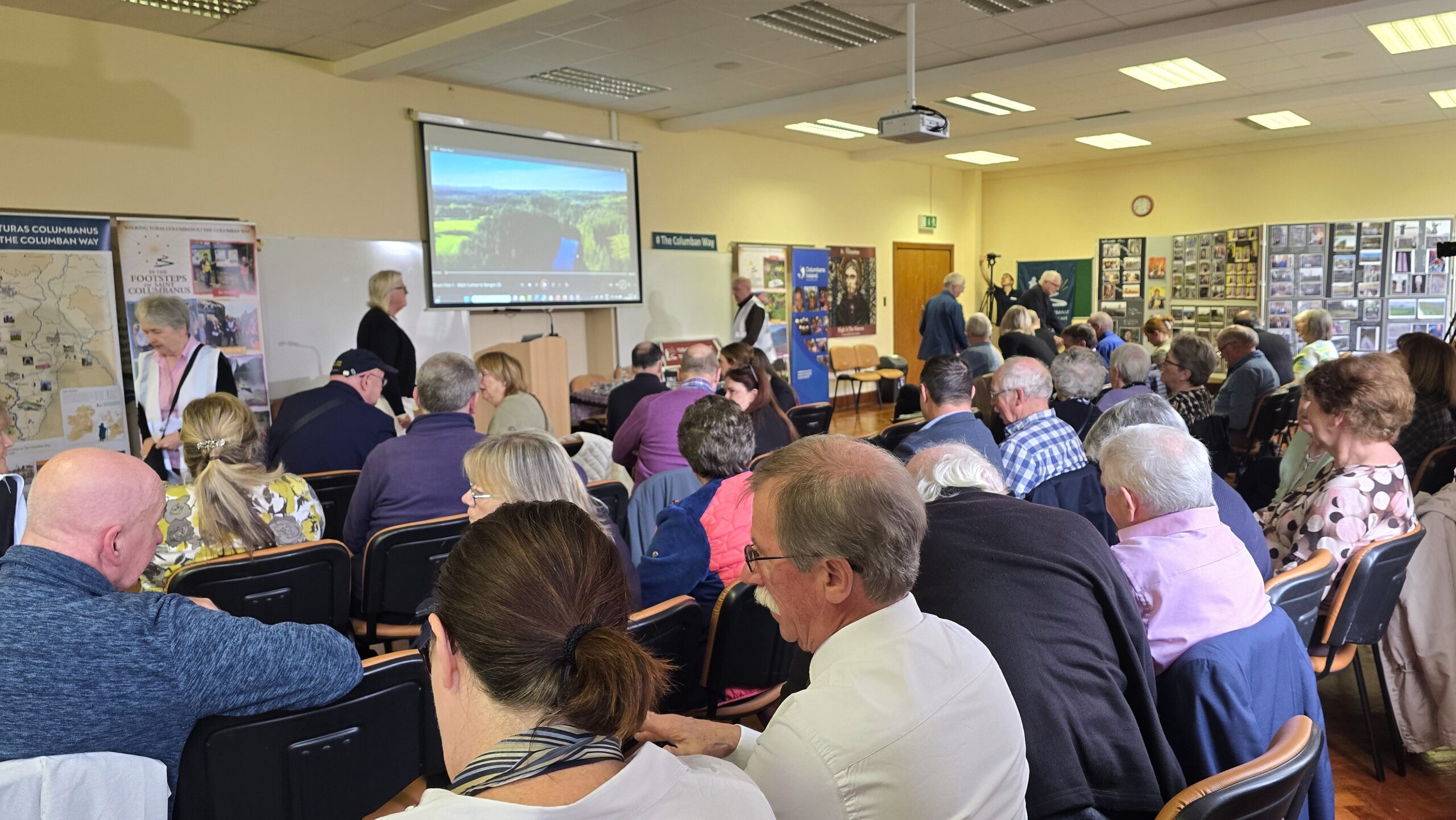
Cllr Girvan was speaking after a one-day conference in Dalgan, which was organised by the Columban Way/Turas Columbanus. It brought together speakers including representatives from Fáilte Ireland, the National Monuments Service and Dublin Technological University’s Department of Religious Tourism.
The conference celebrated Co Meath’s twinning with Italy as part of Ireland’s Presidency of the EU.
It was opened by Columban Missionaries Fr Pat Colgan and Sr Ann Gray.
In his presentation, Fr Pat told participants, “The connection between the Columbans, the Irish Turas Columbanus organisation, and the European Via Columbani Partnership is built on their shared heritage of the 6th-century Irish missionary, St Columbanus.”
“Columbans serve as core founders, organizational members, and active participants in these pilgrimage and cultural networks.”
For Columbans, this translates into crossing geographic and cultural borders to serve God’s people. For the Via Columbani Partnership, it manifests as an invitation to step back from familiar routines, put on walking boots, and cross modern borders to experience the vulnerability and spiritual renewal of the open road. This echoes St Columbanus’s famous sermon quote: “Life is a real road, broad for some and narrow for others”.
“Columbanus was deeply attuned to the natural world, famously writing, ‘If you wish to know the Creator, understand creation.’ He was also a cross-cultural bridgebuilder who was the first recorded writer to address the people of the continent collectively as ‘Europe,’ urging peace during a highly divided medieval era.”
“The Via Columbani Partnership embeds this directly into its foundational charter, stating a spiritual duty to work ‘in a spirit of openness, tolerance and respect’ to foster peace between all territories and peoples.”
Columban Sr Ann Gray explained how in his letters to the popes of his time, Columban was often confrontational.
“He was the first person to use the phrase totius Europea – all of Europe. This phrase of Columban’s was also quoted by Robert Schuman in 1950 when he was trying to bring together France and Germany after World War II.”
He embraced the spirit of peregrination.
Speaking about the historical links between the Columbans and China, she highlighted how the first Columban Fathers to go to China “soon realized that it was not culturally accepted in China at that time for men to minister to women and so they realised their need for us [Columban Sisters] – and we like to remind them every now and then that they still need us!”
It was Fr John Blowick, co-founder of the Columban Fathers, and Lady Frances Moloney, later known as our Mother Mary Patrick, who shared a vision and brought the Missionary Sisters of St Columban into being.
The first Columban Sisters joined in 1922, aided by the Irish Sisters of Charity. With the profession of their First Vows in 1924, “we were formally established. We celebrated our centenary two years ago. China was the first mission.”
£With St Columban as our patron, in addition to adopting his spirit of wandering for Christ, all our missionary life is guided by his motto: ‘Let us be Christ’s not our own’.”
“With Columbanus as our model, we Columban Fathers and Sisters have never been afraid to speak out and act – a characteristic that led to the martyrdom of Columban Fathers in Korea and the Philippines and the killing of our Sr Joan Sawyer in Peru.”
“Expelled from China, both the Fathers and the Sisters over the years then expanded our mission outreach to include various countries in the Far East, South America and Oceania.”
Dr Kevin Griffin of TYD discussed the historical and cultural significance of Irish monasticism and its evolution into religious tourism and pilgrimage. He highlighted how more people are seeking meaningful values-based experiences for themselves and the communities they visit and how the Columban Way has the potential within cultural tourism for significant growth.
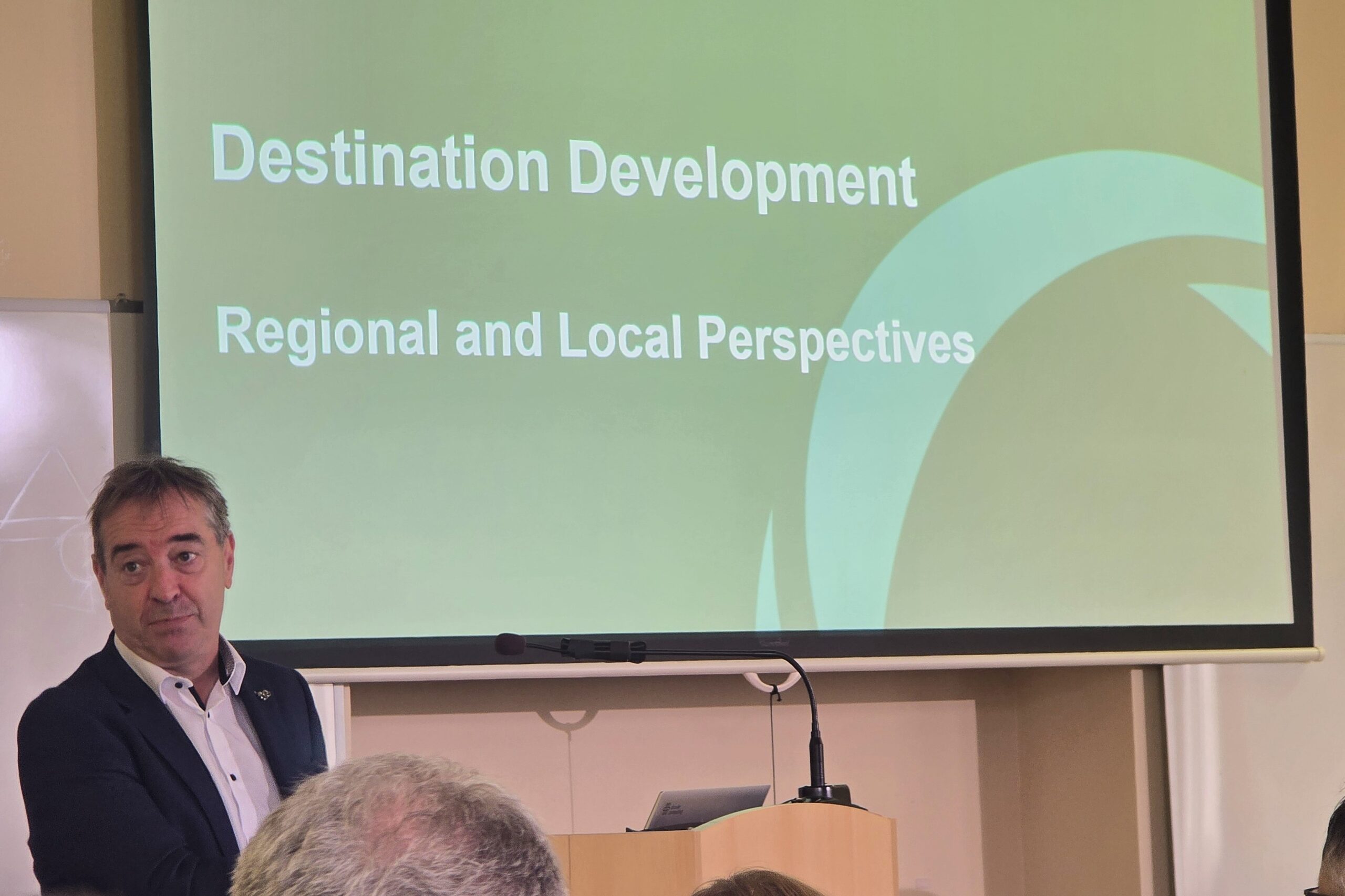
Mark Mohan and Norma Forrest of Fáilte Ireland spoke to the conference about the potential for pilgrim trails to foster regenerative tourism through sustainable tourism models and rural revitalisation.
Mark Mohan discussed the branding of the tourism area – Ireland’s Ancient East – which showcases over 5,000 years of history through prehistoric megalithic sites like Newgrange in the Boyne Valley, to Early Christian and Medieval Ireland.
The Boyne Valley Camino, from Drogheda along 25kms to Mellifont Abbey, “only happened because of the enthusiasm of the locals”, stressing the importance of a community venture and grassroots in bringing a vision to fruition.
Noting how thousands of Ireland people leave Ireland to go on pilgrim walks overseas, Mark Mohan said a trail like the Boyne Valley Camino provided a reason for Irish people to start their camino experience in Ireland “like their ancestors”.
Dr John Knightly, World Heritage/EICR Lead for EU Cultural Routes in Ireland provided insights into his experience of EU Cultural Routes, the certification process and the possible opportunities for the Columban Way to tap into the funding for this European initiative.
The Cultural Routes are grassroots networks promoting the principles which underlie the work and values of the Council of Europe: human rights, cultural democracy, cultural diversity, mutual understanding and exchanges across boundaries.
They act as channels for intercultural dialogue and promote a better knowledge and understanding of European history.