Columban missionary Fr Barry Cairns marks the 80th anniversary of the atomic bombing of Japan and one Catholic’s campaign for peace and reconciliation.
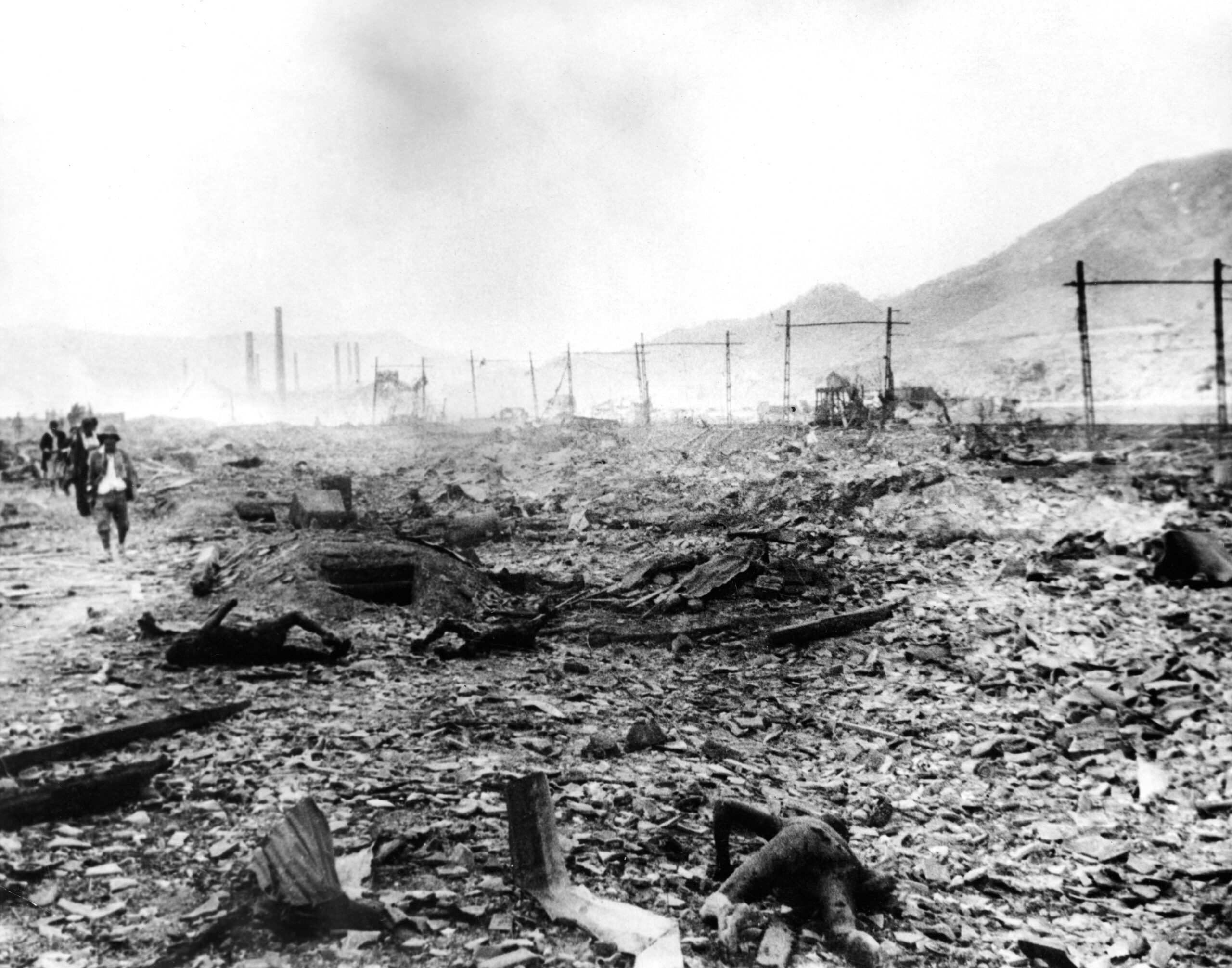
It is 80 years since atomic bombs struck Hiroshima and Nagasaki. On 6th August 1945 at 8:15am the first of these explosions occurred killing an estimated 69,000 in Hiroshima.
Then on 9th August at 11:02am the second explosion in Nagasaki killed 39,000. At the epicentre, in 3000C degree heat, human beings were incinerated alive. Dying of burns is an excruciating way to die.
I came to Japan as a Columban priest-missionary 69 years ago in 1956. I met A-bomb survivors, some of them suffering from radiation sickness. Their faces had an unhealthy yellow tinge. Some spoke of the guilt they still felt more than a decade after the war ended, for not answering the desperate cries for water of the more seriously wounded and dying.
I was asked by a survivor to offer mass for some of his family members who died as a result of the bombing. At the prayers of the faithful he read out the names of 19 relatives. An estimated 10,000 Catholics died in Nagasaki. The city has been the centre of the old Christians since St Francis Xavier’s time.
In recent decades, Japan has joined the prosperous ‘developed’ countries of the world and most people, Japanese included, have forgotten the desperate post-war conditions. When I first came to Japan the people were still much affected by the trauma of war and the death, destruction and poverty that had come in its wake. Poverty was prevalent especially outside the big cities.
In my first mission assignment, as an assistant pastor in Chiba prefecture, I would distribute food and clothing to the very poor each Friday. There were seven tuberculosis sanitoriums in the area. Limbless former soldiers, dressed in white, begged for help outside the railway stations.
In Nagasaki I visited the Atom Bomb Memorial Museum. The photos of burned victims were horrendous. But what really touched me was a small child’s tricycle, burnt and twisted. It personalised the destructiveness and lethality of one bomb. I left the museum sickened and indeed angry. In that turbulent mood I walked a short distance to a small wooden hut. For three years after the war, Dr Takashi Paul Nagai lived there with his two children. He later became bed-ridden with radiation sickness which affected his liver.
Dr Takashi Paul Nagai was a radiologist, so while many of those affected by the bomb had no comprehension of what was happening to them, he had some idea of the nature of radiation sickness. He was a Catholic family man and a professor of medicine at Nagasaki University Hospital. His post-war account of his experience, ‘The Bells of Nagasaki’ is a remarkable document.
From that tiny wooden hut Dr Nagai campaigned for peace and reconciliation, not recrimination. Behind the Nagai’s hut there is now a small, tasteful museum. Dr Nagai’s son Makoto guided me through the exhibits. On later visits, I was shown around by the grandson, Tokusaburo.
In the museum I saw a tiny, melted pile that had been a rosary. This rosary had often been in the hands of Dr Nagai’s beloved wife Midori, who was killed instantly in the atomic blast. But by the time I left that small museum my anger had been replaced by hope. Thanks to Dr Nagai, I felt and still feel motivated to be an instrument of Christ’s peace.
All these years later, the number of atomic bomb survivors (hibakusha in Japanese) have dwindled down to a few. But they have continued to raise their voices and they were awarded the Nobel Peace Prize for 2024.
In the interviews afterwards, the group’s representatives emphasised that a nuclear bomb is radically different to a conventional bomb. Just one nuclear bomb kills a massive number of people indiscriminately. There is no distinction made between military targets and civilians.
The International Peace Research Institute of Stockholm estimates that the nine nuclear-armed nations possess 12,121 nuclear weapons among them. I echo the prayerful plea of Dr Nagai: “May there be peace! Let Nagasaki be the last atomic bomb.”
Columban Fr Barry Cairns is a New Zealander. Ordained in 1955, he has spent most of his life on mission in Japan.
First published in the July/August 2025 issue of the Far East magazine. Please subscribe here and support the work of our Columban Missionaries: https://columbans.ie/far-east-magazine/
