
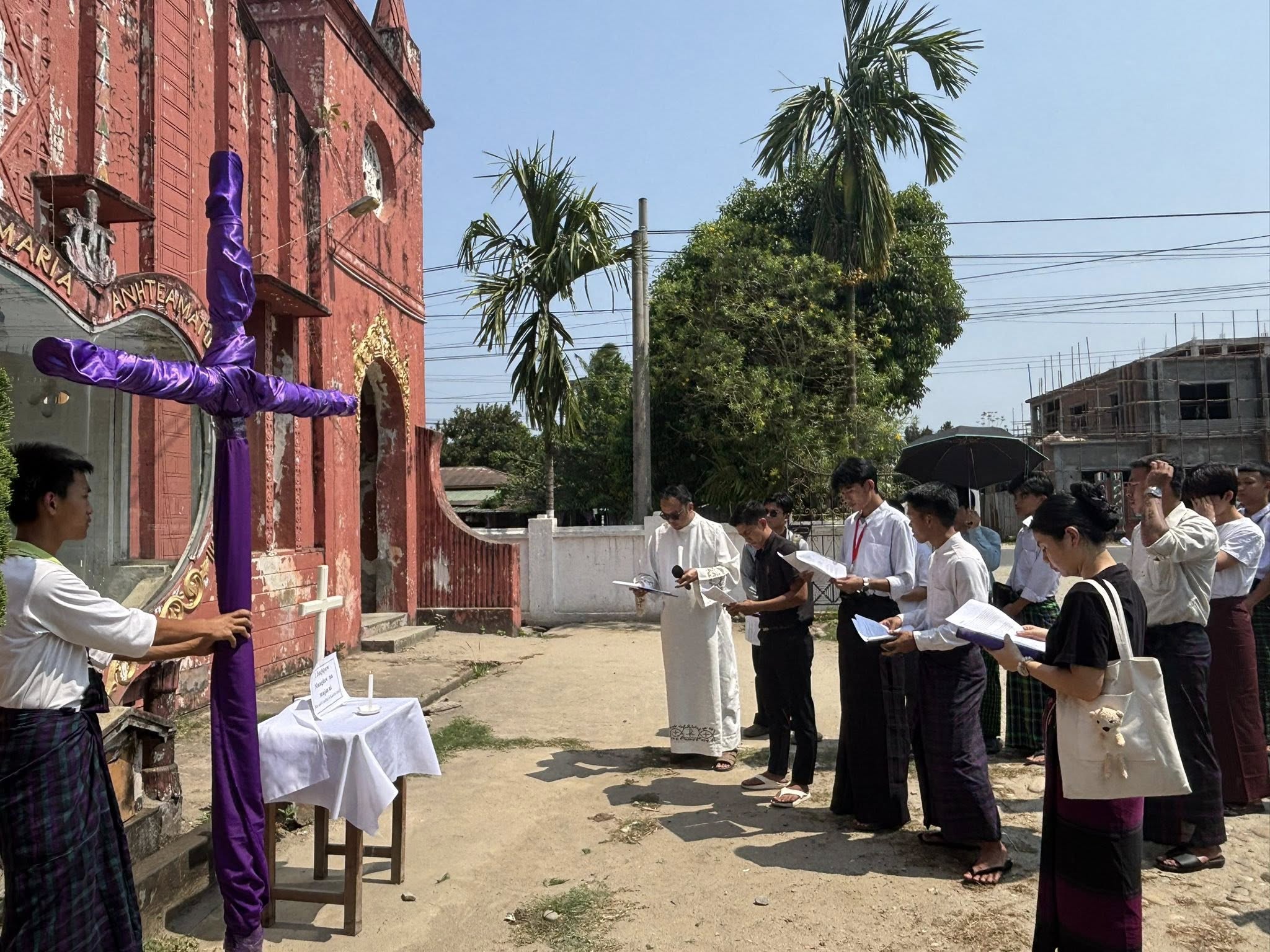
What is mission like in Myanmar? It is Good Friday and Easter Sunday living in the same house, writes Columban Missionary Fr Kurt Zion Pala of the joys and struggles in this challenging country.
When people ask me, “What is mission like in Myanmar?”, I often pause. Mission here is difficult and beautiful. It is broken and hopeful. It is cautiously walking on a path between the sounds of Buddhist chants and the bells and the echoes of rockets fired from Myitkyina to the surrounding villages.
Mission in a Land of Tears. Myanmar has always been promoted as the Golden Land of Myanmar but today it is war-torn country – a Golden Land of Tears. Many families live in fear, in displacement camps, or in villages that can disappear overnight.
Young people used to carry dreams but now carry firearms and also trauma. Parents worry not only about their children’s future, but about tomorrow’s meal. Parents are left behind while the young leave the country to escape army conscription and poverty.
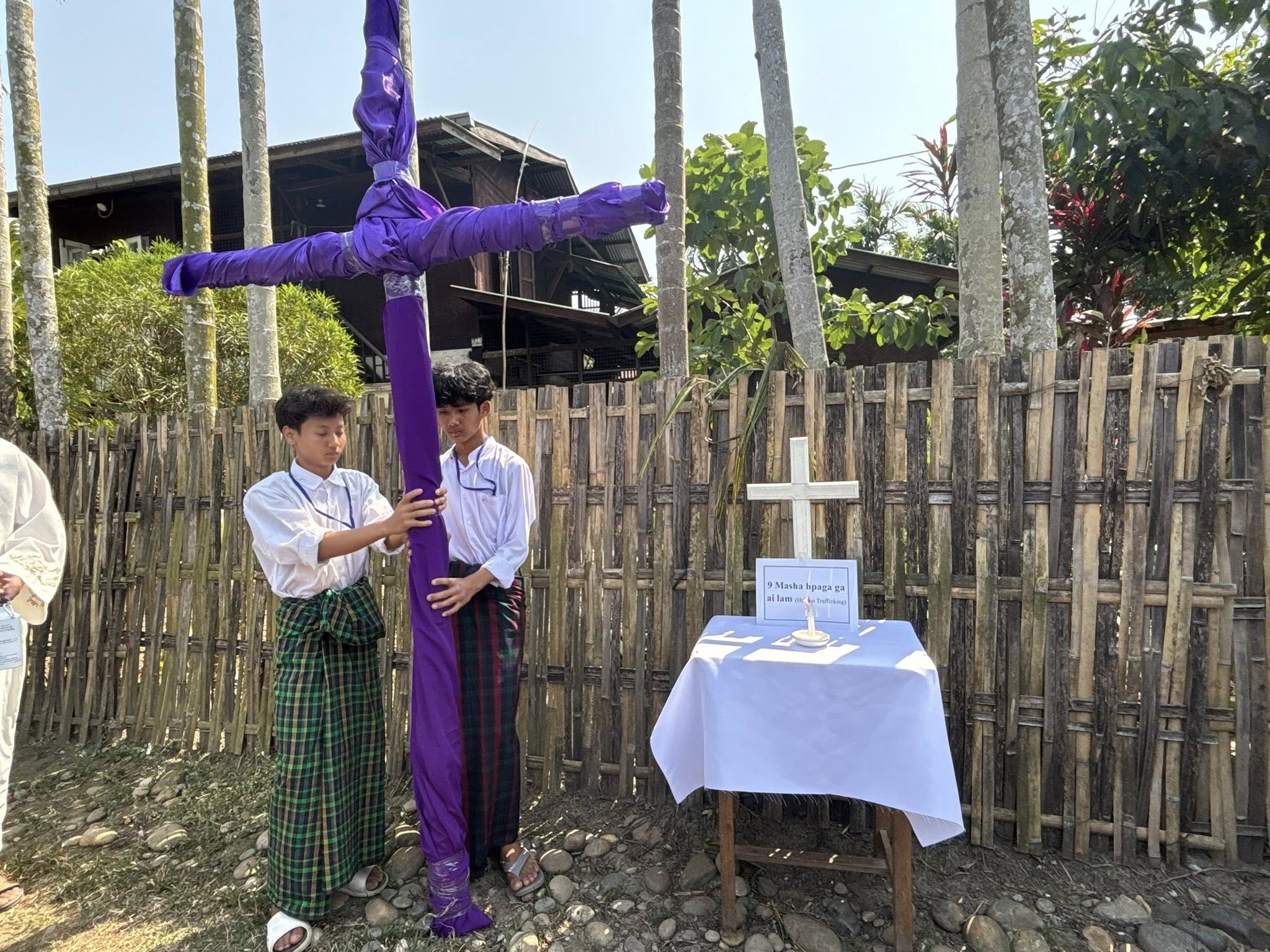
As a priest, I have anointed young people shot at a protest or dying from drug addiction. I have listened to mothers share about being moved from one camp to another. And for many they have nowhere else to go. I have listened to many young people express feelings of being lost and disheartened. I have celebrated Mass with communities displaced by the war, who are tired, yet still singing the psalms of hope.
My first struggle in mission was realising that I cannot fix Myanmar. I cannot stop the war. I cannot remove all the suffering or ease all their worries and pain. But I can be present and listen. In Laudato Si’ Pope Francis reminded us to listen to the cry of the poor and also the cry of the earth. In Myanmar the poor and the earth are wailing.
Slowly I learned: mission is not first about doing things for people; it is about being with people and learning from the People. The Kachin people and the many other communities of Myanmar have evangelised me more than I have evangelized them.
They taught me how to pray while waiting for peace, to trust in God every moment of their lives and share the last cup of rice with a neighbour, and how to enjoy the small things in life even when electricity and internet disappear for weeks. I have learned to give thanks more and complain less.
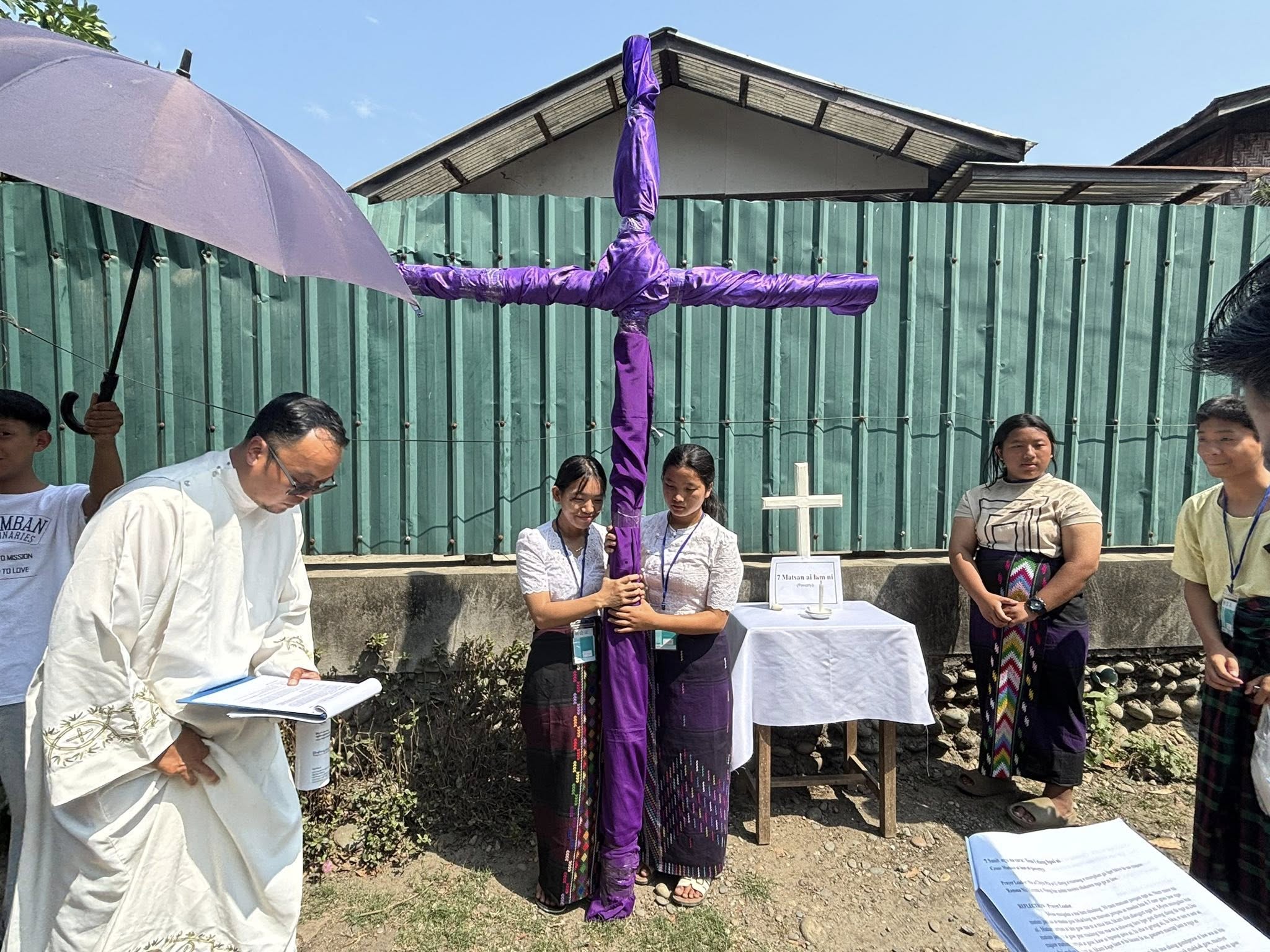
I remember preparing for a homily and later sharing it – doubting myself when I spoke that God is good and He cares for us all. I remember asking myself – “Where is God in all of these suffering?” Then I find myself celebrating the Eucharist in an IDP camp or among young persons or among recovering alcoholics and drug-addicted individuals, they sang louder and sweeter than any choir I have heard.
In that moment I understood: Emmanuel – God is among us, the Church is strongest when it is poorest. They have lost everything, their homes, villages and lost many sons and daughters to the war but not their faith.
Nothing prepares you for the mission. On my first few months in Myanmar, I was very excited and had so many ideas for the ministries I intended to do. But I realized it is not my mission but God’s mission. I struggled with helplessness when young people ask me for jobs I cannot provide or ask questions I have no answers.
I struggled with anxieties when I carefully plan and things do not happen the way I want them to. I struggled with my own fears every time I encounter a soldier at checkpoints. I struggled every time a young person gives up.
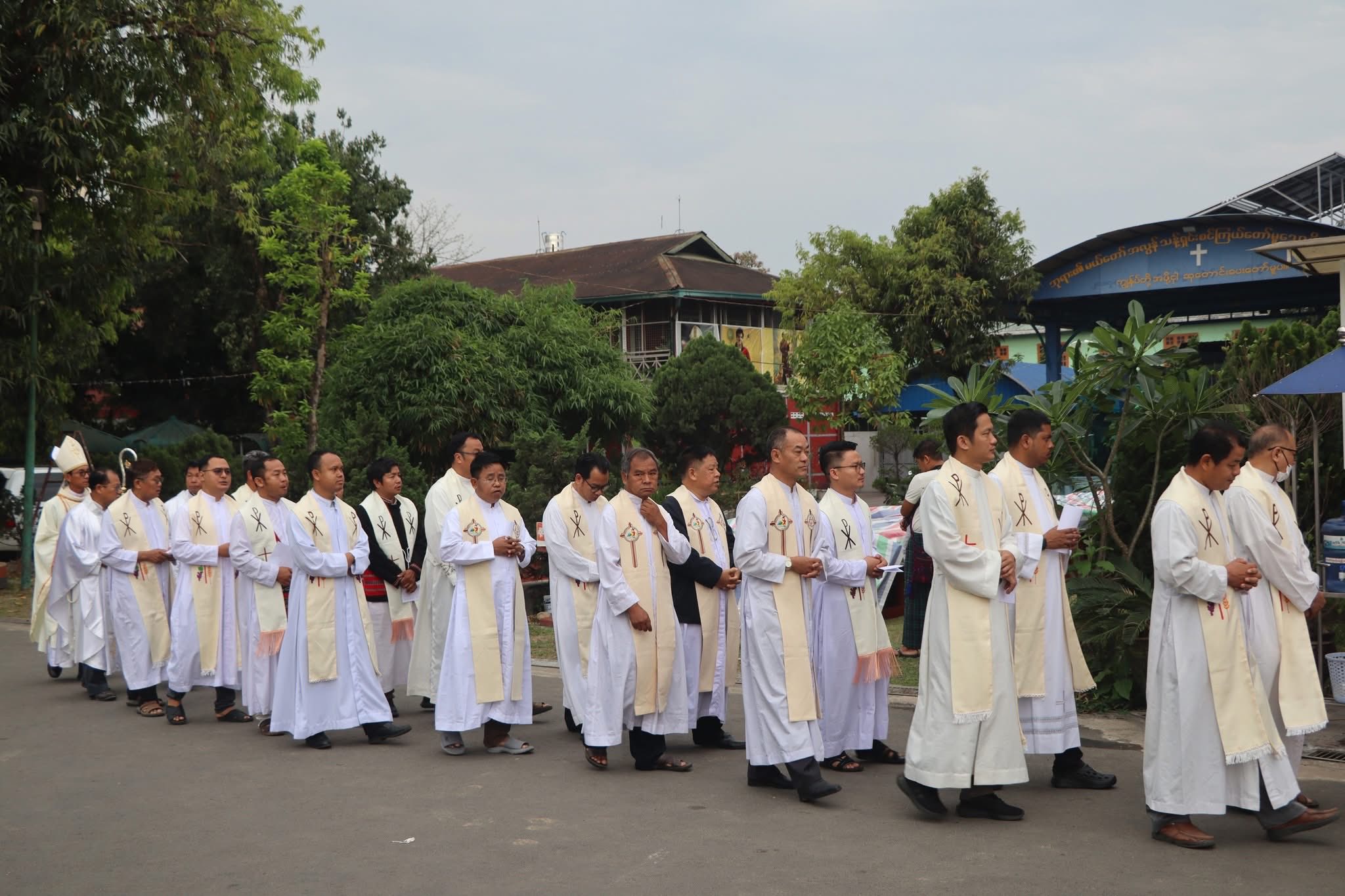
There were days I asked God, “What am I doing here in Myanmar?” Mission in Myanmar has stripped me of the illusion that a missionary is a hero. I discovered I am simply a companion, often weak, often confused just like the people I minister yet called to remain.
My friend Ashin Nandasara, a Buddhist monk now studying in Thailand once brought me to his village and his childhood monastery in Shwe Bo. I often visit him before the start of the coup. His parents would prepare my dinner every night for that one month I stayed in the monastery because monks in the monastery do not eat dinner.
Pottery in Myanmar is dominated by handcrafted clay pots produced in his village. The city is famous for natural clay pot production. These craftsmen and women make huge clay pots for water and other things. These pots are then loaded on boats that bring these jars to all parts of the country.
Now his village is a battleground for the Burmese Army and the young people who call themselves as the “Peoples’ Défense Forces.”
The clay jars remind me of St Paul saying, “We carry this treasure in clay jars.” I feel the cracks of that clay jar every day.
The Joys that Keep Me Alive
Yet, the joys are greater than the struggles. I see joy when: a young person becomes confident and able to create his or her own path in life, the youth organize themselves to help the poor, young persons from different faiths celebrate together different feasts, and when Buddhists, Baptists, Catholics, and Muslims protect one another in times of danger.
But my greatest joy is witnessing faith. I have given first communion to young deaf adults or children with special needs who waited years before they could receive communion. Their joy and smiles after receiving Jesus in the communion reminded me why I became a priest.
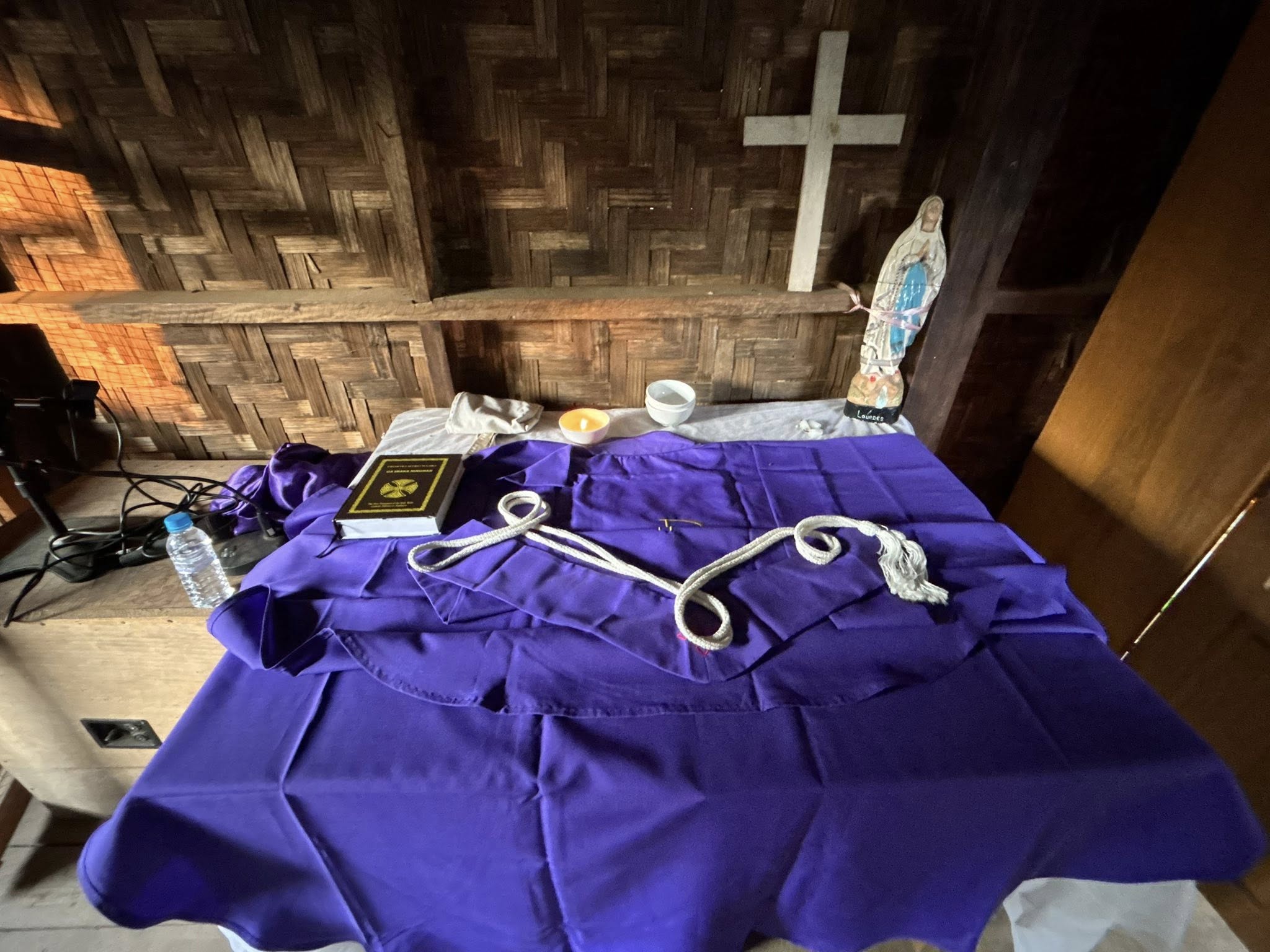
I have heard confessions under makeshift halls and chapels, celebrated Christmas with the displaced – just like Jesus, Joseph and Mary, and felt that Christ was more real there than anywhere else. God is no longer just Emmanuel, but mission has given me a new name for God: God-with-the-suffering-people.
Mission in Myanmar today means:
- accompanying a crucified people – the displaced and the youth
- forming the young to be confident and resilient leaders who believe peace is still possible, and
- advocating for care for creation when forests and the land are destroyed by mining and conflict.
It is not about building big projects. It is about building small communities of hope.
As Columbans we say: we cross boundaries. In Myanmar the boundaries are plenty – ethnic, religious, political, and even boundaries of despair. To cross them requires patience, listening, and sometimes silence more than words.
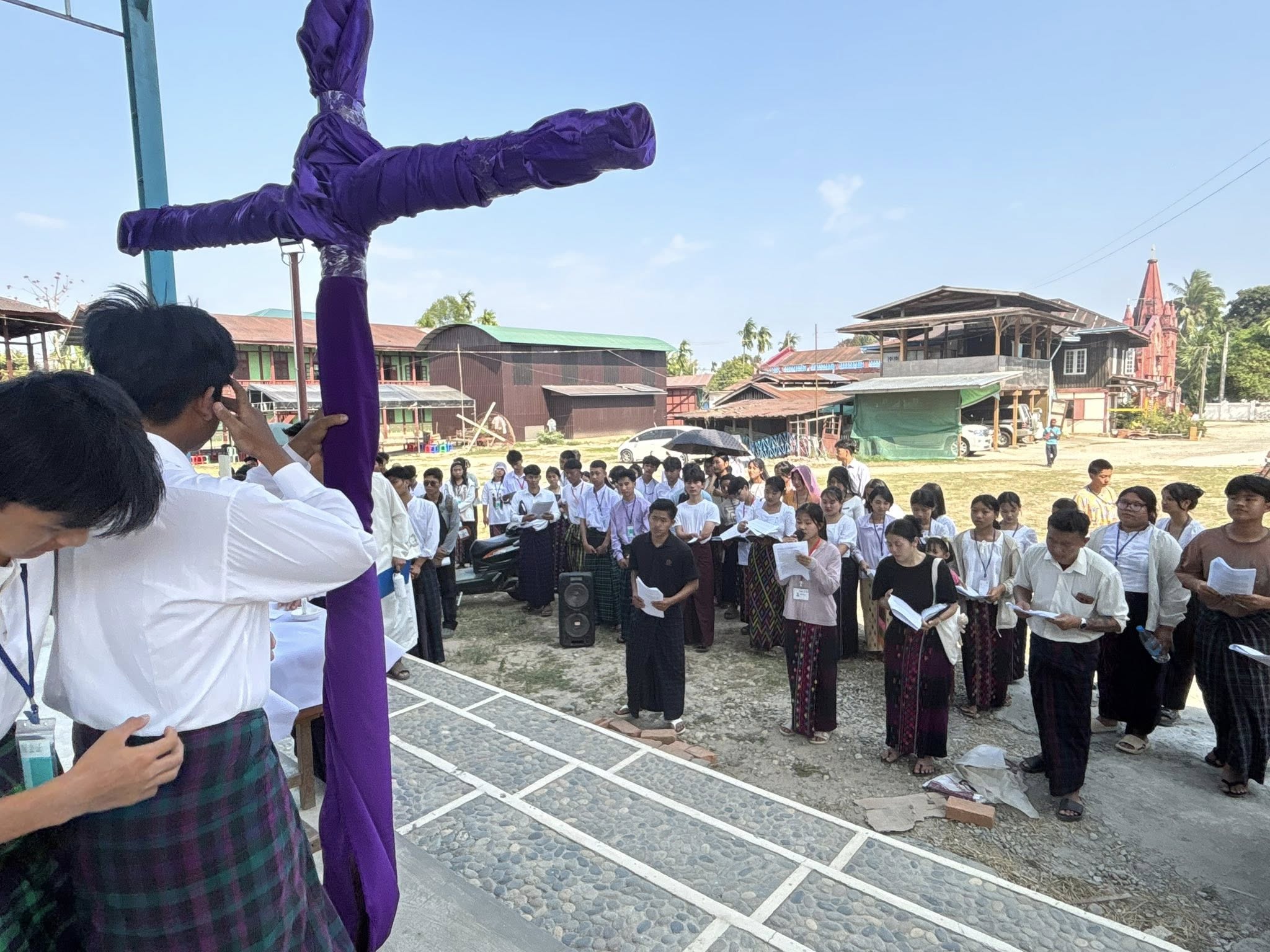
My Prayer. When celebrating the Eucharist I often pray: Lord, do not let me be a visitor to the pain of your people. Make me a neighbour. Teach me to break the bread of hope even when my own hands are empty. In Myanmar, the Eucharist comes alive in the lives of the people.
So what is mission like in Myanmar? It is Good Friday and Easter morning living in the same house. It is walking with a people who refuse to give up on God, even when the world seems to have given up on them. At Mass, we remember the Roman Centurion asks Jesus to heal his servant saying, “Lord, I am not worthy to receive you under my roof!” We too recognize Jesus’ mercy and power to heal and enter our lives this Lent Season.
I keep returning to Myanmar and I remain here because the Gospel is most alive among those who are suffering and wounded. And because the people of Myanmar have taught me that mission is not where we bring Christ—it is where Christ is already waiting for us.
Thank you for walking with us in prayer and solidarity. Please continue to pray for us. Do not forget us!
Image: Shutterstock