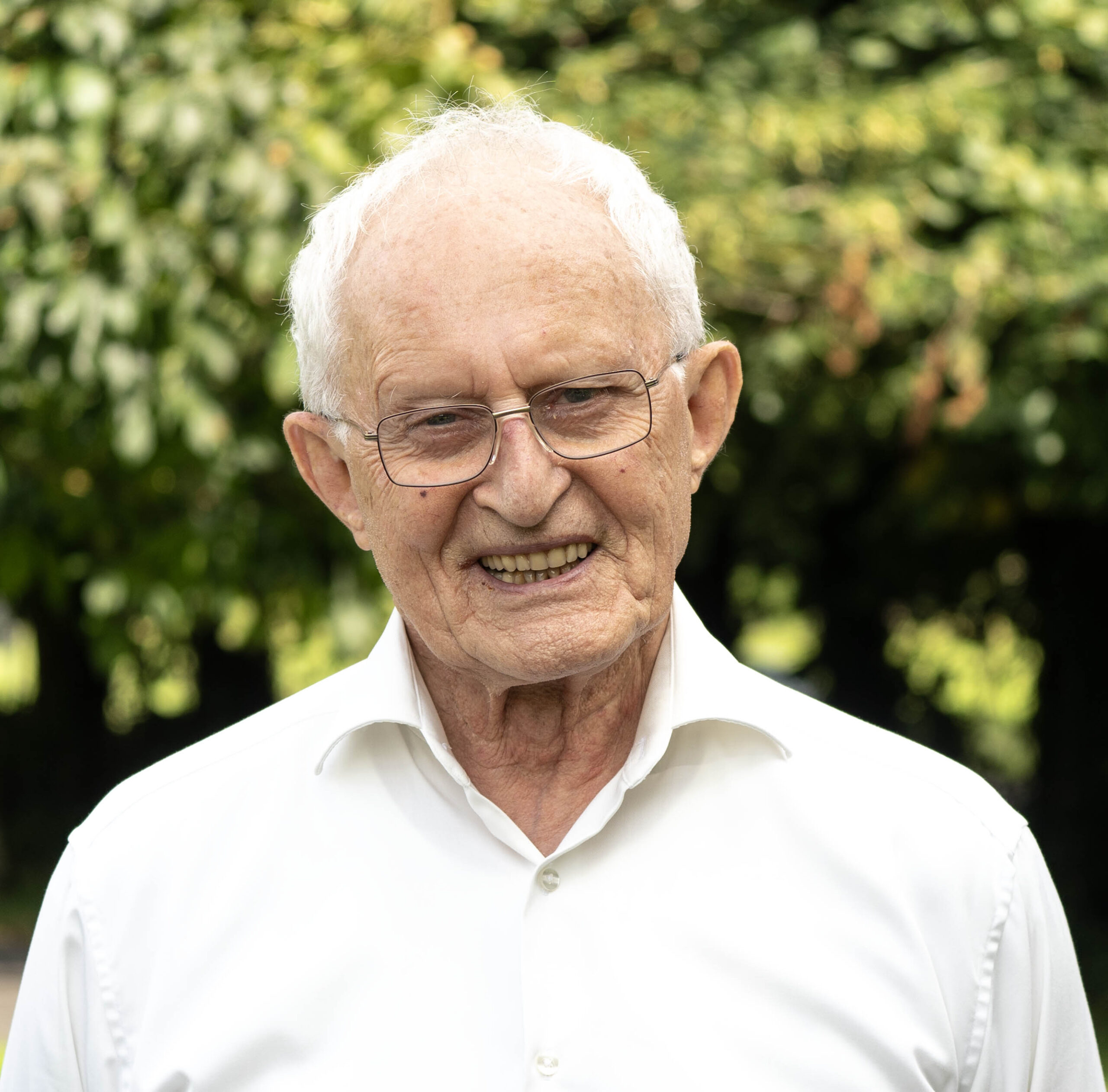
Fr Noel Kerins has been a Columban priest for over 60 years. He spoke to Fr Alo Connaughton about the changes he has seen during his time as a missionary in Peru.
Q: You went to Peru in 1965 and have been there most of the years since. In brief, what are some of the positive changes that strike you today?
Fr N: The first is the number of people that have now completed primary and secondary education. In my early years, at a meeting in the parish, you’d invite someone to read and they would say, “Sorry Padre, I forgot my glasses.” They would be ashamed to admit they couldn’t read. In spite of all its failings the country has managed to educate a lot of people.
A second thing has to do with the development of the Church. The Second Vatican Council (1962-65) was shaped by the thinking of the First World. It was the most significant Church event of the 20th century; the assembled bishops reflected on how to announce the Gospel in the present day and published the fruits of their reflection in several documents. The document Lumen Gentium explained how the Church understands herself and Gaudium et Spes explained its mission in a very changed modern world.
When the Latin American bishops came home they asked what the documents meant for the Church there. They held their own follow-up meetings. They recognised that the social, political, cultural situation and the way of expressing faith in Latin America are different. ‘This Church should not be dependent for its way of doing theology and planning pastoral activity on countries that are very different from ours.’
The bishops at this first Conference of Medellín 1968 and later conferences decided it was time to become an adult church, not one totally dependent on other countries for its personnel, finance and ideas. For many years now that process has continued. I have been blessed as a missionary to be part of what happened there; I changed slowly because change is difficult.
A third thing is the fact that the majority of people in our parishes have a good knowledge of the Bible. They have one in their houses and actually use it for consolation and inspiration.
A fourth thing is that although Latin America is known for its machista culture, women are slowly beginning to play an important role. Brazil, Chile, Argentina and Peru have had women presidents. Women leaders form the backbone of our parishes. The continent has seen extraordinary and courageous witness by women in the areas of justice and peace – including Columban Sr Joan Sawyer who was killed.
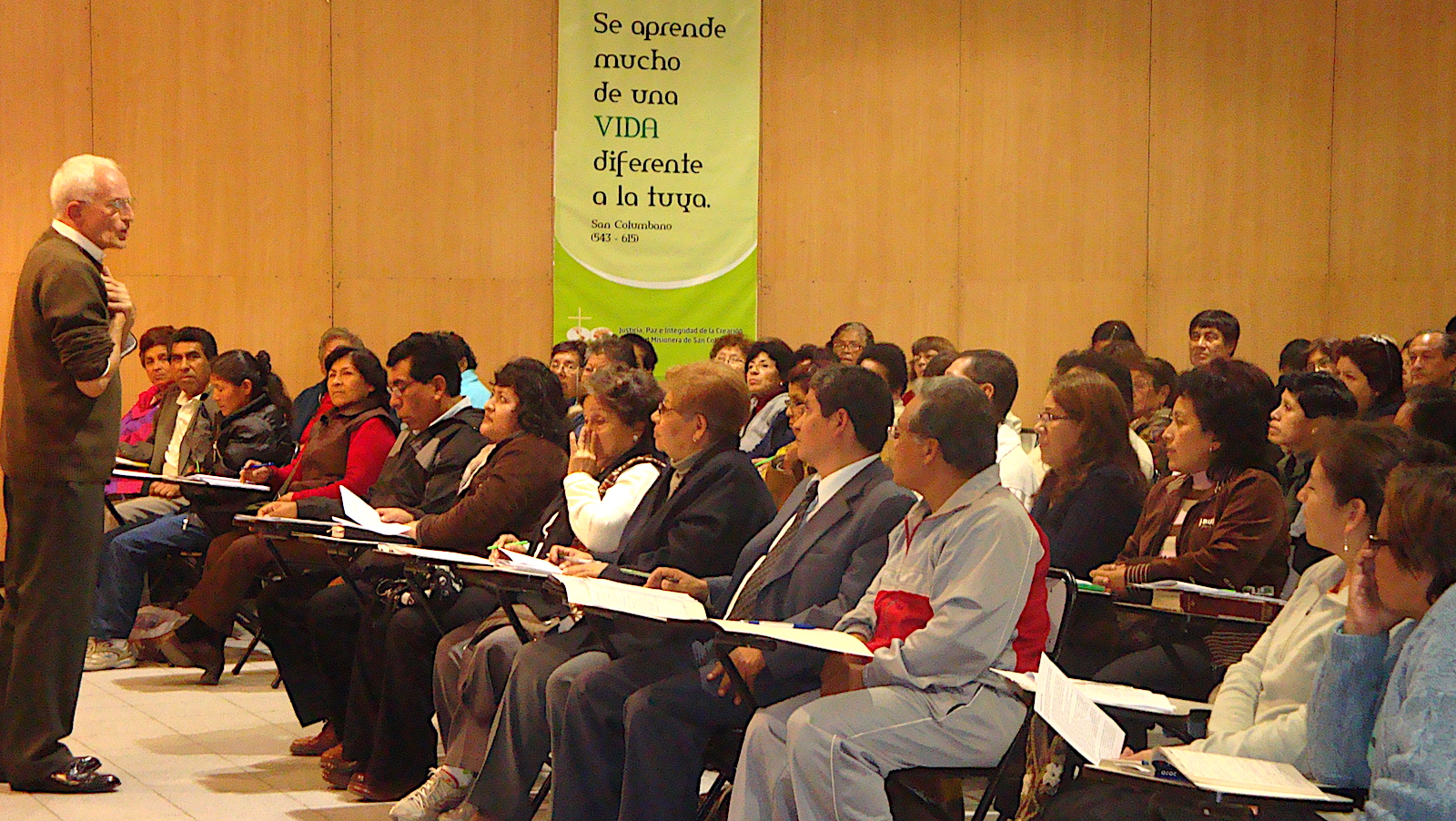
According to Fr Noel, there is still a great interest in adult faith formation in Peru.
Q: When you arrived in Peru, the capital Lima had a population of about 3.5 million people. You have since seen spectacular growth.
Fr N: Today it is close to 11 million. To some extent they have managed to handle that growth. There are still many very poor areas but life continues to improve.
Q: When the label Liberation Theology appeared over 50 years ago some of the reaction was very negative.
Fr N: Over the years I have often heard negative comments about this way of talking about God and interpreting the Bible. If you lived in the situation where the writers of this theology live you would understand why they think and write the way they do. But you would have to stay for enough time and live in solidarity with the poor, like Jesus. Latin America has two big characteristics – grinding poverty and Christianity. All of Latin America is Christian.
I knew Fr Gustavo Gutierrez, the ‘father’ of this new way of doing theology very well. We had regular meetings in his house; he helped us focus on the core of the gospel of Jesus and on ways to announce the Gospel in difficult times.
Q: He had critics in Rome!
Fr N: Yes, there were several years when he was treated with caution, to put it mildly. But Gustavo, like many thinkers, developed with the passing of time. He listened to suggestions and criticisms and made changes. When Pope Benedict came to open the Latin American Bishops’ Conference in Brazil in 2007 he clearly had been influenced by the thinking of the Latin American Church.
When Pope Francis became pope, he set about a process of renewal of the Church; he underlined again Vatican II’s emphasis on how to be a Church, a people of authentic faith in the modern world. His first encyclical in 2013, ‘The Joy of the Gospel’ was his mission statement, his programme. It is a wonderful document that I often try to pray with. It gladdened the hearts of people like Gustavo Gutierrez. It calls for personal and community conversion in following Jesus in a globalised and fractured world.
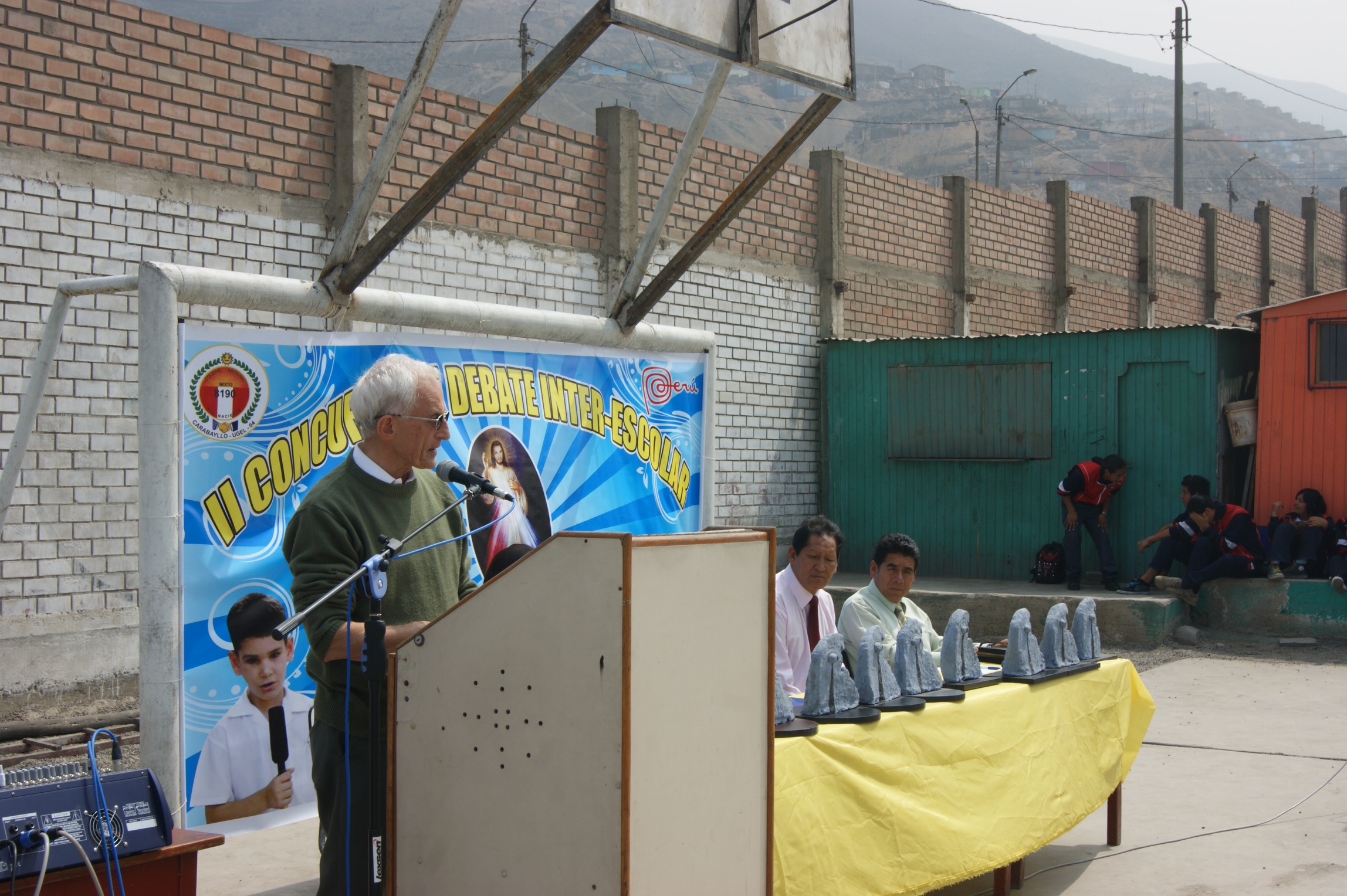
Speaking at the presentation of prizes at an inter-school debating competition in Peru.
Q: In their later life missionaries often express admiration for some characteristics of the people they worked with.
Fr N: For me it is the ability of so many Peruvians to make things work even though so much of life is swimming against the current. Parents work so hard so that their children will have a better life than themselves. They are an extraordinarily creative people when it comes to inventing ways to make a living – making things at home to sell on the street, washing cars, maintaining the gardens of the rich.
In Peru, if you don’t work you have no money; there is still little or no social security network. A phrase I often hear is ‘Hay que tener fé padre’ which means ‘You must have faith, padre.’ It is a human stick-at-it quality. It is a radical belief that the God of life is with us even in our darkest moments.
Q: Self-evaluation might not be the most reliable tool, but what kind of contribution do you think the Columbans have made in Lima?
Fr N: We established and handed over 23 parishes in the Northern Zone of Lima. I sometimes give talks in areas where we once worked. If I ask: ‘Did you ever hear of the Columbans?’ many will say things like, “Yes, we remember them for having their feet on the ground, for often visiting our homes, for talking about the Gospel in a way that we could relate to and for doing things with us rather than for us.” The people see us as being down to earth, in solidarity and ministers of a more just and habitable common home. In spite of all the ups and downs they keep at it. ‘Hay que tener fé padre’
Fr Alo Connaughton is a former editor of the Far East magazine. He worked in Chile between 1975 and 1993 and was regional director there. Between 2004 and 2007 he worked in Myanmar and taught at Saengtham College, Bangkok until 2022.
First published in the July/August 2026 issue of the Far East magazine. Please subscribe here: https://columbans.ie/far-east-magazine/